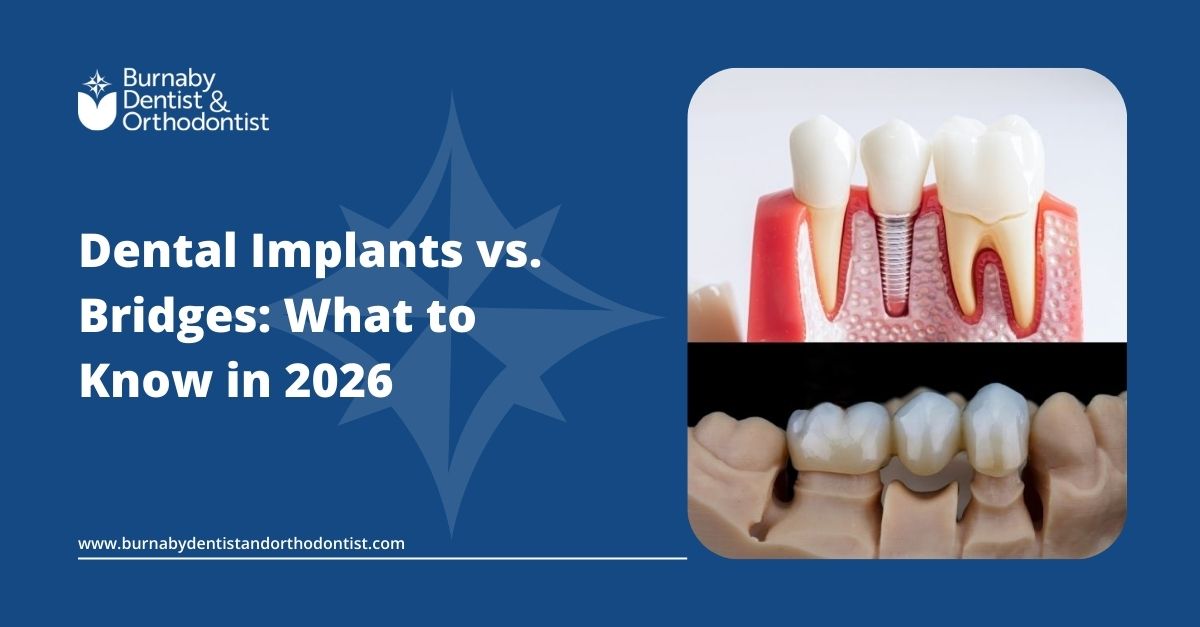
Dental bridges fill the gap. Dental implants replace the root. That’s the key difference but choosing how to replace a missing tooth isn’t just about filling a gap anymore.
In 2026, the difference between implants and bridges is shaped by digital tools, guided surgery, and better long-term data. Patients in Burnaby now have access to precise 3D imaging, faster workflows, and stronger restorative materials, making this comparison more accurate, predictable, and personalized than ever.
We plan with CBCT 3D imaging and guided surgery to make implants precise and predictable.
Let’s see how implants and bridges compare today, longevity, comfort, impact on nearby teeth, timelines, and cost-over-time, so you can choose with confidence.
At a Glance:
Dental implants replace the root, protect bone, and avoid reshaping nearby teeth, making them a long-term option for many patients, especially when bone support is a priority. Bridges remain a reliable choice when you want a faster, non-surgical, or budget-friendly solution, or when bone or health conditions limit implant placement. Your best option depends on bone density, gum health, neighbouring teeth, and your timeline.
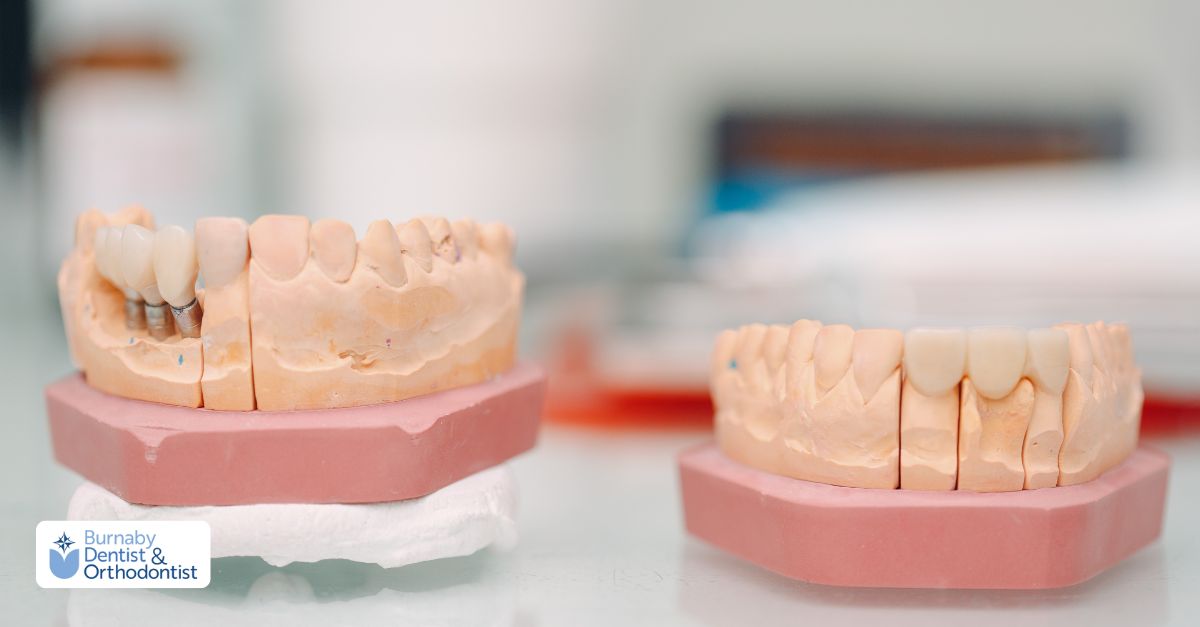
Traditional vs. Modern: Bridges and Implants in Perspective
Dental implants and dental bridges both replace missing teeth, but they work in fundamentally different ways.
In 2026, this comparison looks different than it did even a few years ago. Modern implants benefit from CBCT 3D scans, guided surgical placement, and high-strength zirconia restorations that match natural enamel.
Bridges have also improved with stronger ceramics and better bonding techniques, but they still depend on reshaping nearby teeth, making candidacy more case-specific.
Who’s a Good Candidate for Implants vs Bridges?
Choosing between an implant and a bridge starts with understanding what your mouth can support. Bone strength, gum health, neighbouring teeth, and your comfort with surgery all play a role.
Our team evaluates bone, gums, and your bite as part of our family dental services in Burnaby so you understand which option fits your situation
Below is an overview to help clarify which option makes sense based on your oral health and goals.
Healthy Neighbouring Teeth
If the teeth beside the gap are healthy, strong, and cavity-free, an implant is typically the preferred option.
➤ It avoids shaving down those natural teeth for crowns.
➤ It helps protect long-term tooth structure and reduces the risk of future procedures (like root canals or fractures on abutment teeth).
Patients with strong, intact enamel and good oral hygiene habits generally qualify easily.
Multiple Missing Teeth in a Row
If you’re missing two or more teeth side-by-side, an implant-supported bridge typically provides better stability and long-term function than a traditional bridge.
➤ It distributes biting forces evenly across implants rather than overloading natural teeth.
➤ It helps maintain jawbone height and facial structure.
This approach is often recommended for adults over 18 who have healthy gums and sufficient bone or who are willing to undergo grafting if needed.
Prefer to Avoid Surgery or Need a Faster Solution
If you want a non-surgical option, or you need your teeth restored as quickly as possible, a traditional dental bridge is often the most practical choice.
➤ No surgery or healing time required.
➤ Usually completed in two to three appointments.
This works best when the adjacent teeth are strong enough to support crowns and the patient understands the hygiene requirements of caring for a bridge.
Additional Implant Candidacy Factors
While implants offer the most natural and long-lasting result, they require certain health conditions to be met:
- Strong and Sufficient Jawbone: Osseointegration, bone fusing to the implant, requires enough bone height and density. If bone has shrunk, procedures like ridge preservation or bone grafting can rebuild it.
- Healthy Gums: Healthy gum tissue is critical for protecting the implant site. Any active gum disease needs to be treated before implant placement.
- Good Overall Health: Implants involve minor surgery. Conditions like uncontrolled diabetes or immune disorders may affect healing and require careful planning.
- Commitment to Healthy Habits: Non-smokers and patients who maintain strong home-care routines are the best long-term implant candidates.
Let’s see what each solution replaces and how they work:
How Bridges Work
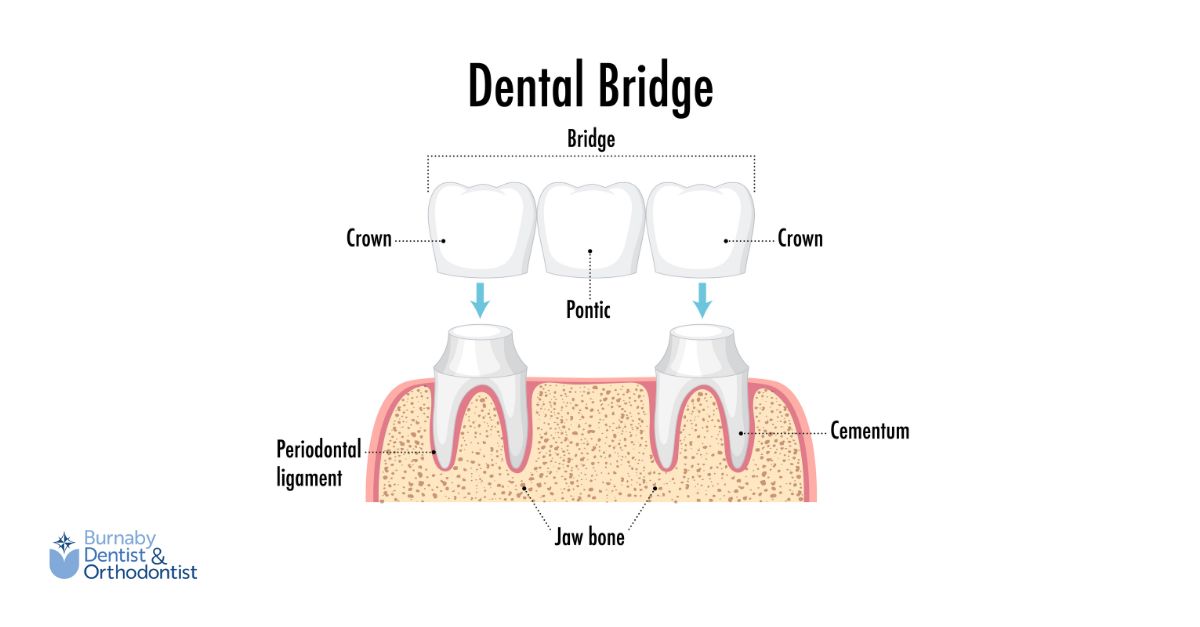
A dental bridge replaces a missing tooth by using the teeth on either side of the gap as anchors.
These anchor teeth, called abutment teeth, are reshaped and fitted with crowns.
Between them sits the replacement tooth, known as a pontic, which fills the gap and restores your smile and chewing function.
The pontic can be made from porcelain, zirconia, metal alloys, or a porcelain-fused-to-metal blend, depending on strength and aesthetic needs. Once the abutment crowns and pontic are fused together as one unit, the entire bridge is cemented onto the supporting teeth.
Bridges do not replace the root of the missing tooth; instead, they rely on your existing teeth (or implants, in the case of an implant-supported bridge) for stability. When planned properly, a bridge restores appearance and bite function quickly, often in just a few appointments.
How Dental Implants Work
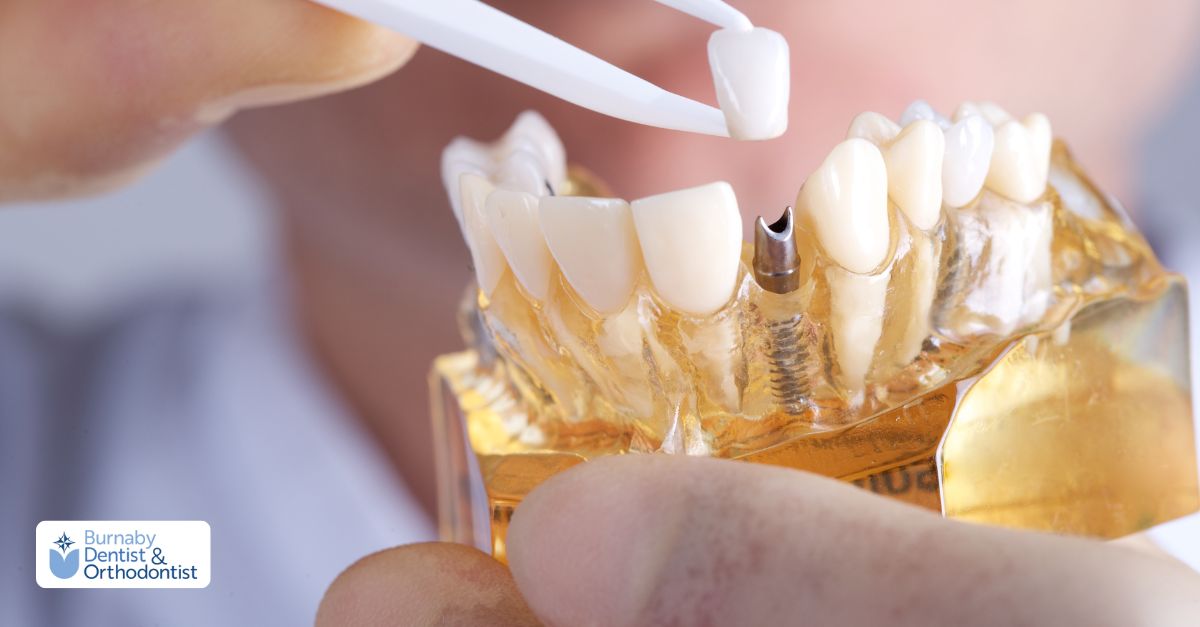
Dental implants replace the entire structure of a missing tooth, from the root under the gum to the crown you see above it. Instead of relying on neighbouring teeth for support, implants integrate directly with your jawbone, creating a long-lasting and stable foundation.
Modern implant treatment, which is a core part of our restorative dental services in Burnaby, uses CBCT 3D imaging, digital planning, and guided surgery to place the implant precisely where your bone is strongest and safest.
Here’s how an implant works, step by step:
- Implant Post: Made from medical-grade titanium, the post is placed into the jawbone, where it fuses through a process called osseointegration. This creates a stable foundation for the restoration.
- Abutment: Once healing is complete, a small connector (the abutment) is placed above the gum line. This links the implant post to your crown.
- Crown: The crown is the part you see, a natural-looking, custom-made replacement tooth that’s colour-matched and shaped to blend in seamlessly with your smile.
Together, these components recreate both the appearance and the function of a natural tooth.
Because the implant bonds directly with the bone, it helps prevent bone loss, keeps neighbouring teeth stable, and allows you to chew comfortably, often with the durability to last decades when maintained properly.
Dental Implant Timeline
These timelines reflect the average healing and planning sequence, but every case is shaped by your bone quality, bite forces, and overall health. Modern digital tools help tailor the process so you know exactly what to expect at each stage.
- Day 0–7 (Digital Planning & Guided Placement): Your appointment includes a CBCT scan, digital impressions, and a fully mapped-out surgical plan. The implant is then placed using a computer-generated guide for accuracy.
- 8–12 Weeks (Osseointegration Period): The bone begins to fuse with the implant post. This stage is essential for long-term stability and successful function.
- 3–6 Months (Final Crown or Implant-Supported Bridge): Once healing is complete, the abutment is attached and a custom crown or multi-tooth implant-supported bridge, is placed to restore full function and aesthetics.

Begin Your Smile Journey With Dr. Sasan Hadianfar
Getting Implants With Low Bone Density
Not every patient has perfect bone volume at the start, especially if a tooth has been missing for months or years. Bone naturally shrinks when a root is no longer present, and this can affect implant placement.
In 2026, however, advanced grafting materials, digital planning, and newer implant designs allow many patients who were previously told “no” to successfully receive implants. The focus is on rebuilding or maximizing existing bone so the implant can integrate securely and last long term.
Below are the most common techniques used when bone is limited:
Ridge Preservation After Extraction
When a tooth is removed, the surrounding bone begins shrinking almost immediately. Placing a bone graft into the socket at the same appointment, called ridge preservation, helps maintain the height and width of the bone.
This makes future implant placement safer, more predictable, and less likely to require additional surgery later.
Bone Graft Options
If bone loss has already occurred, grafting can rebuild the foundation needed to support an implant. Depending on your anatomy, your dentist may use particulate grafts, membrane-guided regeneration, or block grafts to restore the area. This step is highly personalized and planned using 3D imaging.
Narrow or Short Implants
When bone is thinner or shorter than ideal, modern implant systems offer narrow-diameter and short-length implants that can be placed safely without sacrificing strength. These designs are especially useful for lower front teeth, areas with minimal bone, or patients who prefer to avoid more extensive grafting.
When a Sinus Lift Is Needed
For the upper back teeth, the sinus can naturally sit close to the roots. After tooth loss, the bone below it often shrinks further, leaving insufficient vertical height for an implant.
A sinus lift gently raises the sinus membrane and places bone beneath it, creating the necessary space for secure implant anchorage. This procedure is common and well-supported by long-term data.
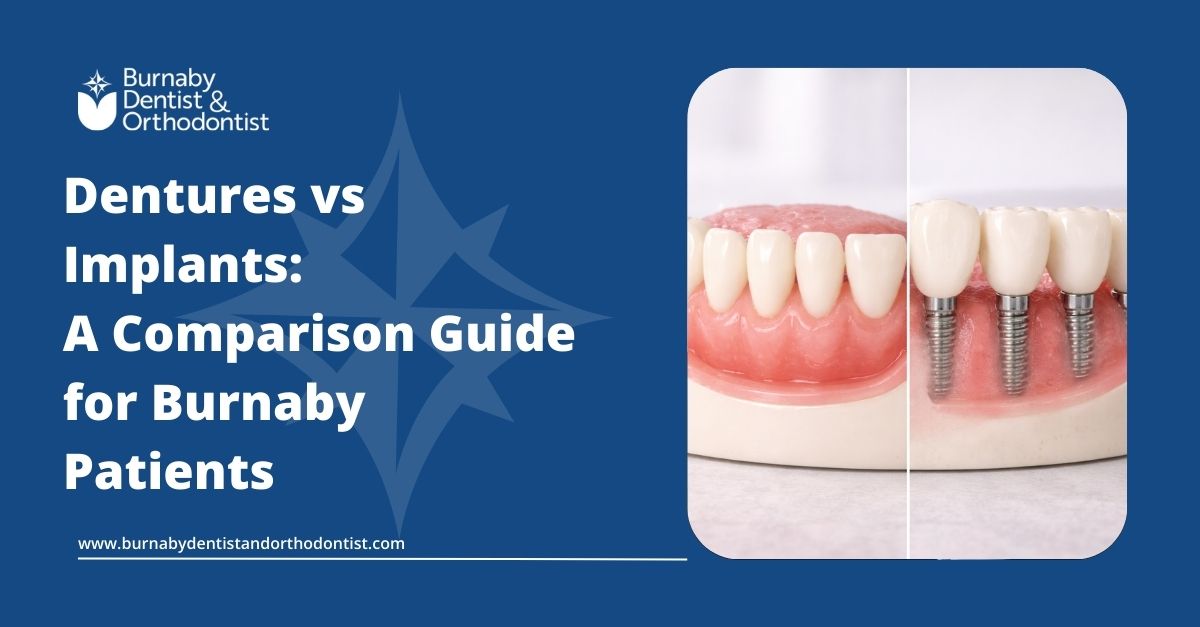
When a Dental Bridge Still Makes Sense
While dental implants are often the long-term ideal, traditional dental bridges remain a reliable and appropriate option in several real-world situations.
A bridge can restore chewing, prevent neighbouring teeth from drifting, and improve your smile without requiring surgery or extended healing time. For many patients, this balance of convenience and predictability makes a bridge the better choice.
Bridges are especially suitable when implant surgery isn’t possible right away, whether due to medical conditions, healing limitations, or medications that interfere with bone regeneration.
They’re also a strong solution when a patient prefers to avoid surgery altogether.
In cases where timing is critical, such as upcoming travel, events, or work commitments, a bridge offers a much faster turnaround, often completed in just a few appointments.
For patients missing multiple teeth in a row, a bridge can also be a cost-effective way to restore function, particularly if the supporting teeth already need crowns. When budget or timeline is the priority, and the abutment teeth are healthy and strong, a traditional bridge remains a practical and clinically sound choice.
Protect Your Abutment Teeth (Care Basics)
A bridge relies on the teeth beside the gap, your abutment teeth, to support the entire restoration. Protecting them is critical for the long-term success of your bridge.
Super Floss or Water Flosser Daily
Cleaning under the pontic (the false tooth) is essential to prevent decay and inflammation. Super floss, floss threaders, or a water flosser can reach the space beneath the bridge where plaque tends to accumulate.
6-Month Dental Check-Ups
Routine dental checkups in Burnaby allow your dentist to check the margins, cement seal, and health of the abutment teeth. Early detection of small issues prevents bigger problems like decay or bridge loosening.
Nightguard for Grinding
If you clench or grind your teeth, wearing a nightguard helps protect the abutment teeth from excessive force. This reduces the risk of cracks, fractures, or premature bridge failure.
With proper care, a traditional bridge can offer many years of reliable function, especially for patients who need a fast, non-surgical, or medically appropriate tooth replacement option.
Dental Implants vs. Bridges: Quick Comparison Table
Choosing between an implant and a bridge depends on your goals, oral health, and long-term priorities. Here’s how they compare at a glance:
| Category | Dental Implants | Dental Bridges |
| Bone Health | Stimulates and Preserves Jawbone | Bone Loss Occurs Beneath Missing Tooth |
| Tooth Impact | Doesn’t Affect Neighbouring Teeth | Requires Reshaping Adjacent Teeth |
| Appearance | Natural Look and Gum Contour | May Shift or Show Margins Over Time |
| Cost Over Time | Higher Upfront, Lower Long-Term Risk | Lower Upfront, Potential for More Repairs |
| Oral Hygiene | Clean Like Natural Teeth | Requires Special Flossing Tools |
| Ideal For | Long-Term Health and Bite Stability | Quick Fixes or Non-Surgical Restorations |
| Longevity | 15+ Years With Proper Care | 10+ Years With Good Maintenance |
We’ll guide you through these options in your consultation so you can feel confident in the choice that protects your smile, now and in the future.
Cost Comparison: Dental Implants vs Bridges Over Time
Implants usually require a higher initial investment, but they tend to be more cost-effective over time. Because they preserve bone, protect neighbouring teeth, and rarely need replacement, many patients experience fewer interventions and fewer unexpected costs over the years.
A bridge is typically less expensive upfront and can be completed quickly. However, it may require future replacements as the abutment teeth age or weaken. Since a bridge doesn’t prevent bone loss under the pontic, additional treatment may be needed down the road. The lower initial cost doesn’t always align with lower lifetime cost.
Ready to see which option fits your mouth, timeline, and long-term goals?
Book a 3D consultation at Burnaby Dentist and Orthodontist and compare implants vs. bridges with real data from your bone and bite.
Patient Profiles: Which Option Fits You?
There’s no one-size-fits-all answer. The right solution depends on your oral health, personal goals, and how long you want the result to last. These common profiles can help you think through your next step. Below are common patient scenarios and the option that typically fits best.
One Missing Tooth, Healthy Neighbours → Choose an Implant
If the teeth next to your gap are intact, an implant preserves them. There’s no need to reshape healthy enamel or risk future damage to supporting teeth. The implant also protects bone in the missing tooth site.
Several Missing Teeth in a Row → Consider an Implant-Supported Bridge
When multiple teeth are missing, implants can anchor a longer bridge without involving your remaining teeth. It’s a stable, long-lasting solution that doesn’t sacrifice structure for coverage.
Low Bone or Surgery Isn’t an Option → A Traditional Bridge May Work
Some patients aren’t candidates for implants due to low bone density, medications, or other health concerns. In these cases, a bridge can restore function and appearance quickly without surgery or grafting.
Need a Faster, Non-Surgical Fix → A Bridge Is Likely Best
If you’re on a short timeline, before a medical procedure, trip, or major event, a bridge can restore your bite faster. It’s often used as a temporary or mid-term solution with the option to plan for implants later.
Want a Long-Term, Bone-Preserving Solution → Dental Implant
If your priority is preserving your jawbone, avoiding future dental work, and getting something that feels truly natural, an implant is often the smarter long-term investment.
What If You’re Not Ready for Surgery Yet?
Not every patient is ready for implant surgery right away. You may need time to address medical conditions, heal from an extraction, complete bone grafting, or simply feel more comfortable with the process. In these cases, there are stable temporary solutions.
Temporary Bridge as a Short-Term Option
A tooth-colored temporary bridge can restore appearance and function while you prepare for an implant. It keeps neighbouring teeth in position and maintains your bite until implant placement is appropriate.
Monitoring Bite and Bone Health
Regular exams and CBCT scans allow your dentist to track changes in your jawbone and ensure you’re positioned for long-term implant success. Early intervention, like ridge preservation or bone grafting, can prevent bone loss during this waiting period.
Short-Term vs Long-Term Planning
For many patients, the smartest approach is:
➤ Short-term: Use a temporary or traditional bridge for immediate function.
➤ Long-term: Transition to an implant once you’re medically and logistically ready.
This strategy balances convenience now with stronger stability for the future.
Why Choose Burnaby Dentist & Orthodontist for Dental Implants
Replacing a tooth is a long-term decision and the team guiding you through it matters just as much as the material used.
Here’s what you can expect from us:
Digital Precision, Start to Finish
We use digital dental scans and in-house 3D imaging to plan every step of your treatment. With guided surgery and custom-mapped placement, your implant fits accurately and heals efficiently. No messy impressions. No guesswork.
Plans That Fit Your Life
Your time and comfort matter. Whether you’re replacing one tooth or several, we build a timeline that works with your schedule, not against it. You’ll always know what’s next and why it matters.
Expertise in Complex Cases
Our team has extensive experience placing implants, from single-tooth replacements to full-arch restorations. We’re also experienced in treating patients with bone loss, medical conditions, or failed bridges. If your case needs extra planning, you’re in good hands.
Care That Goes Beyond the Procedure
Your follow-up matters as much as your surgery. We provide clear hygiene instructions, maintenance visits, and ongoing support to keep your implant strong for the long term.
Let’s make your next step the right one. At our Burnaby clinic, we combine modern tools with a commitment to care, because your result should feel natural and last.
Conclusion
Replacing a missing tooth isn’t just about filling a gap, it’s about making a long-term decision for your health, function, and confidence.
Dental implants offer stability, preserve your jawbone, and protect nearby teeth. Bridges still have their place, especially when speed or non-surgical options are priorities. The best solution depends on your goals, health, and timeline.
As the Burnaby dentist, we guide you through the decision with digital precision, honest insight, and supportive care every step of the way.
Book a 3D consultation and explore how modern dental technology in Burnaby helps you compare implants and bridges with real data.
Do implants last longer than dental bridges?

Yes. Implants can last 15+ years or even decades with proper care. Bridges typically last around 10+ years.
Does a bridge damage the teeth beside the gap?
Yes. Adjacent teeth must be reshaped for crowns to support the bridge.
Do dental implants prevent bone loss?
Yes. Implants replace the root and stimulate your jawbone, helping prevent future bone shrinkage.
Can I get implants if I have low bone density?
Often yes. Techniques like bone grafting, ridge preservation, or using narrow/short implants can rebuild or maximize available bone.
When is a traditional bridge the better choice?
When you want a faster, non-surgical option, when you have medical restrictions, or when the supporting teeth already need crowns.