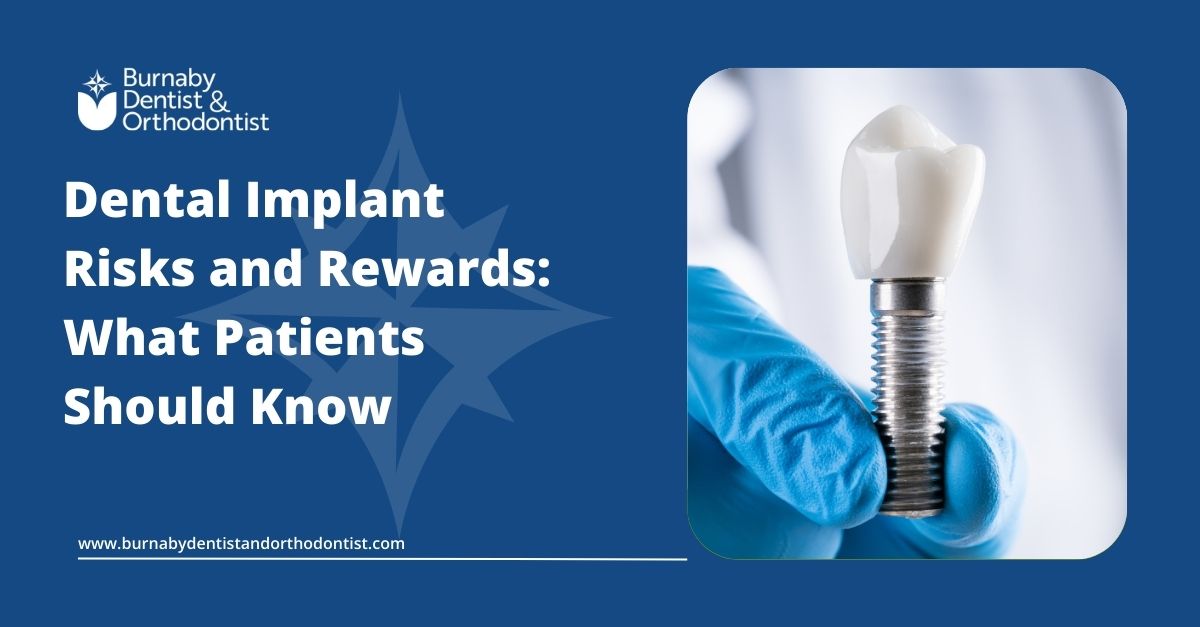
Dental implants are often described as a long-term option for replacing missing teeth. However, understanding the healing process, potential risks, and long-term maintenance requirements is essential before making a decision.
This blog outlines both potential benefits and considerations so patients can make informed decisions.
At a Glance:
Dental implants are a commonly used option for replacing missing teeth and involve both surgical considerations and long-term benefits.
- Risks: Require minor surgery, healing time, adequate bone support, higher initial cost, and lifestyle factors such as smoking can affect outcomes.
- Potential Benefits: Help maintain jawbone structure, avoid altering adjacent teeth, restore chewing ability, and may last many years with proper care.
Implants are not suitable for every patient, and long-term success depends on clinical conditions and ongoing maintenance.
The Realities Behind Dental Implants
Dental implants are designed to function similarly to natural teeth in terms of stability and chewing support. However, they require a healing period and ongoing oral care. They are designed to integrate with surrounding structures, support chewing function, and help maintain jawbone structure. However, treatment is typically completed in stages and requires a defined healing period.
An implant involves minor surgery, a healing period that can stretch into months, and a strong commitment to oral care. It’s not just about getting a tooth replaced; it’s about undergoing a process that requires patience and discipline. When this reality is understood upfront, patients can make more informed treatment decisions.
Potential Risks and Considerations
Dental implants are widely used in clinical practice, but like any surgical treatment, they involve potential risks. These risks should be reviewed during treatment planning; they’re considerations that help you make an informed decision.
Risks of Implant Surgery
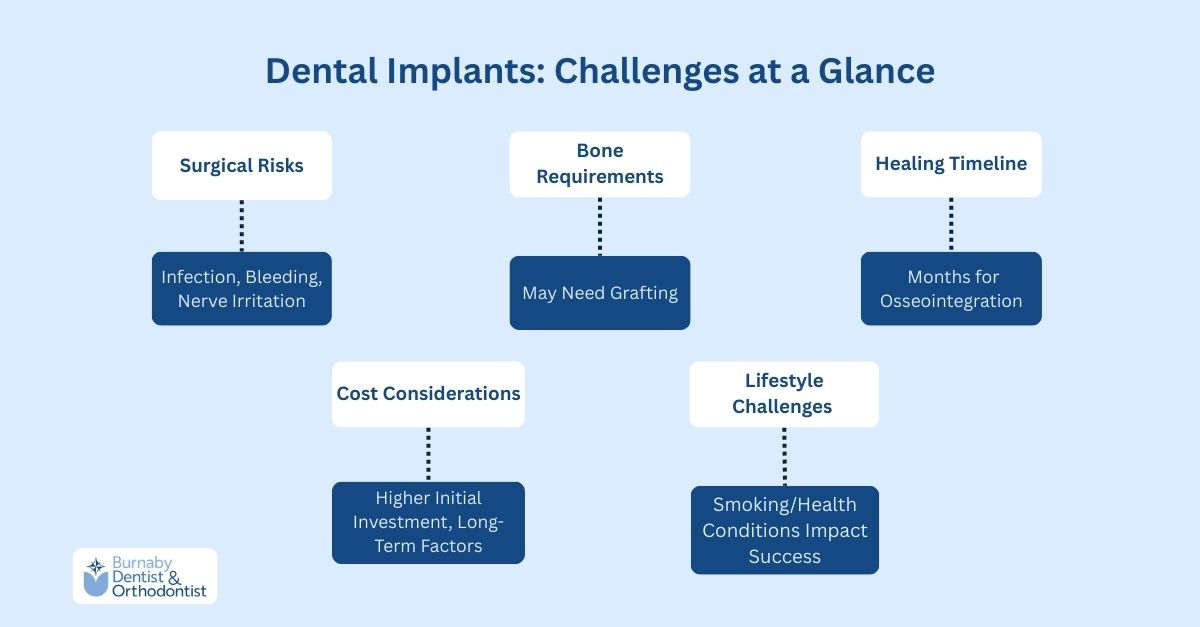
Placing an implant means minor oral surgery. Potential risks include infection, bleeding, or nerve irritation. Careful planning with 3D imaging is intended to help reduce these risks.
Bone Requirements for Implants
Not everyone has enough jawbone to support an implant. In such cases, bone grafting may be necessary, which adds time and cost to treatment.
Healing Timeline for Dental Implants
Implants don’t deliver the same-day results. Osseointegration, the fusion of implant and bone, can take several months before a crown is placed.
True Costs of Dental Implants
Implants cost more upfront than bridges or dentures. Long-term cost depends on maintenance, longevity, and the need for future replacements.
Lifestyle Challenges with Implants
Habits like smoking or uncontrolled health conditions such as diabetes can lower success rates, making strict aftercare essential for long-term stability.
Underrated Rewards of Dental Implants
Dental implants offer functional and structural advantages in appropriate cases. These factors are why implants are frequently considered in long-term treatment planning.
How Implants Preserve Bone Health
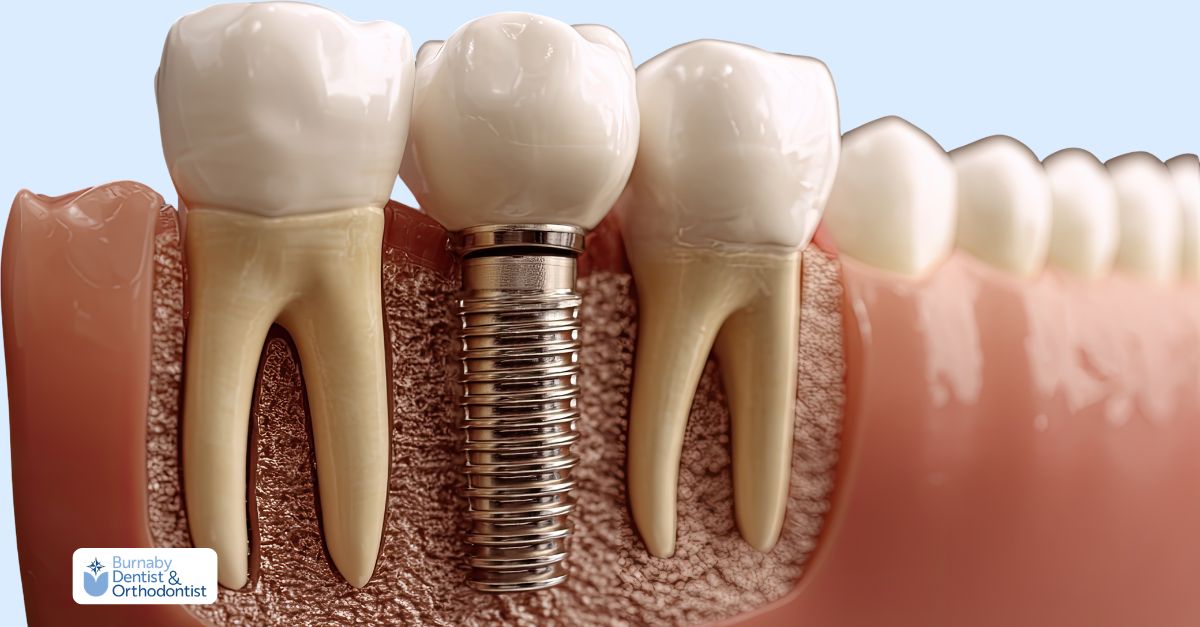
Implants are designed to stimulate the jawbone in a way that may help limit bone loss following tooth extraction.
Impact of Implants on Confidence and Daily Life
Implants may improve speaking and chewing stability compared to removable options, which can contribute to increased confidence for some patients.
Durability and Lifespan of Dental Implants
With proper care and maintenance, implants may function for many years, although longevity varies by patient and clinical conditions.
Implants and Overall Oral Health
Unlike bridges, implants don’t depend on altering neighbouring teeth, preserving natural tooth structure and supporting overall oral stability.
Dental Implant Success Rates1
Long-term evidence suggests that many implants remain functional for 20 years or more, though survival rates vary based on patient health, maintenance, and clinical variables.

Begin Your Smile Journey With Dr. Sasan Hadianfar
Dental Implants Compared with Bridges and Dentures
Dental implants are not the only way to replace missing teeth, but they differ in long-term considerations such as value, function, and comfort. Here’s how they stack up against bridges and dentures:
| Factor | Dental Implants | Dental Bridges | Dentures |
| Longevity | 10+ Years with Proper Care2 | 5-15 Years 3 | 7-10 Years4 |
| Function | Restores Natural Chewing Strength | Relies on Adjacent Teeth | Less Stable, Reduced Bite Force |
| Aesthetics | Seamless Natural Appearance | Blends with Neighboring Teeth | May Look Less Natural |
| Maintenance | Same Care as Natural Teeth | Requires Specialized Cleaning | Daily Removal and Soaking |
| Cost Over Time | Higher Initial Investment | Moderate Initial Investment | Lower Initial Investment |
Ideal Candidates and Contraindications for Implants
Dental implants may significantly improve function and aesthetics for appropriate candidates. Knowing whether you’re a good candidate helps avoid frustration and supports more predictable outcomes.
Best Candidates
Suitable candidates often include individuals who have:
- Healthy gums and good oral hygiene habits
- Adequate jawbone density
- Overall stable medical health
Who Should Be Cautious
Certain health factors or habits may reduce implant success:
- Individuals with uncontrolled diabetes or compromised immunity.
- Heavy smokers who struggle with healing.
- Patients taking medications that affect bone strength.
- Those unwilling to commit to follow-up care and maintenance.
Dental implants are a powerful solution, but success depends as much on your health and habits as the surgery itself.
Cost-Benefit Analysis of Dental Implants
When you first hear the price of implants, it can feel steep compared to other options. A balanced evaluation includes both short-term and long-term considerations.
Short-Term Expense
The initial investment for implants is higher than for bridges or dentures. This includes surgery, imaging, and crown restoration.
Long-Term Savings
Implants may require fewer replacements compared to some other options, depending on maintenance and clinical factors. Bridges and dentures, on the other hand, often require adjustments, repairs, or complete replacements over the years.
Overall Value
Beyond finances, implants are designed to help preserve jawbone structure, avoid altering neighbouring teeth, and support natural chewing function, depending on clinical factors.
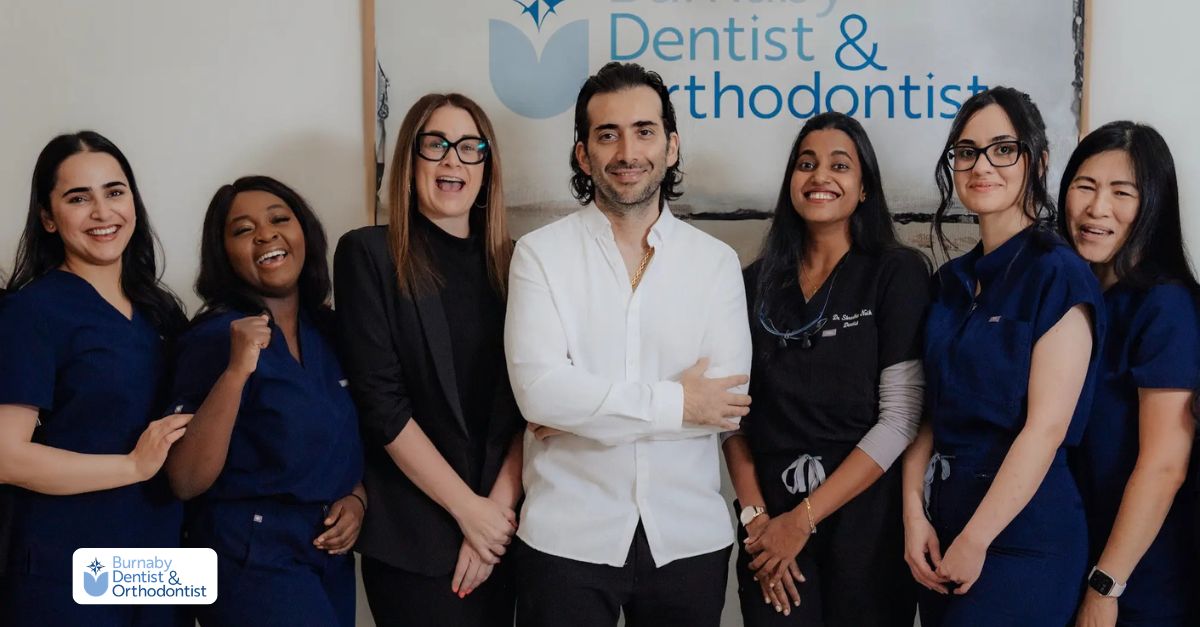
How Burnaby Dentist & Orthodontist Minimizes Implant Risks
While every surgical procedure carries some level of risk, the right planning and care can help reduce the likelihood of complications. At Burnaby Dentist & Orthodontist, risk management is built into every step of implant treatment.
Advanced Imaging
We use 3D scans to map your jaw precisely, helping identify nerve pathways and supporting accurate implant placement.
Careful Screening
Every patient is evaluated for gum health, bone density, and medical history to confirm implant suitability before moving forward.
Structured Aftercare
We provide clear recovery guidelines and schedule follow-ups to track healing, address concerns early, and support long-term success.
By pairing technology with a patient-first approach, we aim to reduce risks through structured planning.
Conclusion
Dental implants may improve chewing function and aesthetics for appropriate candidates. From surgical healing to upfront costs, success depends on preparation, patience, and proper care.
The potential benefits can be meaningful when treatment is successful: long-term stability, preserved bone, and a restoration designed to function in coordination with surrounding teeth. Reviewing both the potential risks and benefits supports informed decision-making before treatment.
If you’re considering implants, book a consultation with Burnaby Dentist & Orthodontist. An appointment allows time to review clinical findings and discuss appropriate treatment planning.
What can go wrong with dental implants?

Complications are uncommon but possible. Risks include infection, implant loosening, or delayed healing.
Do implants always work?
Clinical studies report high survival rates under appropriate conditions; however, outcomes vary based on patient health, maintenance, and clinical factors.
Is the surgery painful?
Local anesthesia is used to manage discomfort during the procedure. Mild soreness afterwards is common but typically resolves within days.