Waking up with a dry, sticky mouth every morning can be easy to dismiss. You may also notice cracked lips, morning bad breath, or a sore throat. For parents, the first clue may be a child who regularly sleeps with their mouth open or snores at night.
Mouth breathing means regularly breathing partly or mainly through the mouth instead of the nose, either while awake, asleep, or both. It can occur for several reasons, including nasal congestion or other conditions that make nasal breathing more difficult.
Many of the mouth breathing effects on teeth are linked to one important change: a drier oral environment. Saliva normally helps neutralize acids, clear food and microorganisms, lubricate oral tissues, and support enamel remineralization. When the mouth remains open for extended periods, dryness may reduce some of these protective effects.
Over time, chronic mouth breathing may be associated with oral health changes that deserve attention, particularly when dry mouth, gum inflammation, dental problems, snoring, or changes in a child’s bite occur alongside it.
At a Glance:
- Mouth breathing means regularly breathing partly or mainly through the mouth instead of the nose.
- Persistent mouth breathing may contribute to dry mouth, reducing some of saliva’s protective effects on teeth and gums.
- It is associated with gingival inflammation and, in children, certain bite and dental arch differences, but it does not directly or inevitably cause these problems.
- Mouth breathing can occur alongside snoring and sleep-disordered breathing, which may require medical assessment.
Some early oral changes may be reversible, while established cavities, tooth damage, or bite differences may require separate dental care. - Identifying why mouth breathing is occurring is important for addressing both its dental effects and any underlying concerns.
What is mouth breathing?
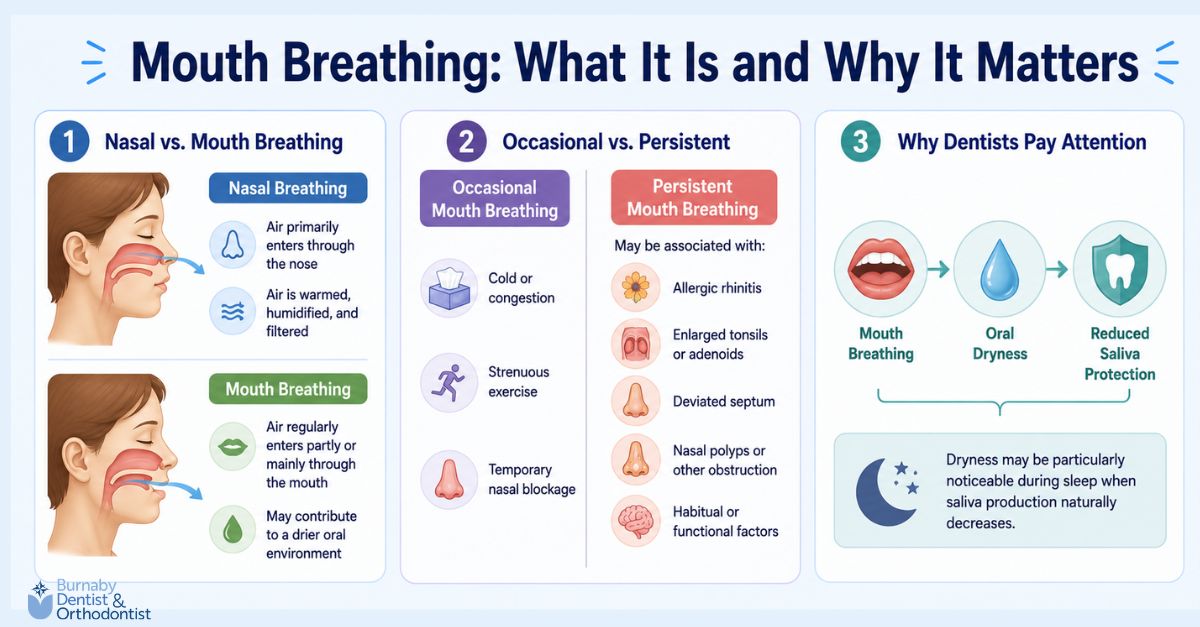
Mouth breathing is a pattern in which a person regularly breathes partly or mainly through the mouth rather than the nose. It may occur during the day, during sleep, or both. In some people, it occurs because nasal airflow is restricted, while structural, inflammatory, functional, or habitual factors may also contribute.
Nasal breathing helps warm, humidify, and filter inhaled air before it reaches the lower respiratory tract. The nasal cavity and paranasal sinuses are also involved in nitric oxide production, although this is primarily a respiratory consideration rather than a direct dental effect.
From an oral-health perspective, persistent mouth breathing is particularly relevant because it is associated with oral dryness. This may become more noticeable overnight, when salivary secretion naturally decreases. A drier oral environment can reduce some of saliva’s protective effects on the teeth and soft tissues.
Occasional vs. Chronic Mouth Breathing
Occasionally breathing through your mouth does not necessarily indicate a problem. Temporary mouth breathing can occur with a cold, nasal congestion, or during strenuous exercise.
Chronic mouth breathing describes a more persistent pattern. Possible contributors include allergic rhinitis, enlarged tonsils or adenoids, a deviated nasal septum, turbinate enlargement, nasal polyps, and other conditions that restrict nasal airflow. In some people, mouth breathing may also persist after an earlier obstruction has improved.
This distinction matters because persistent mouth breathing should not automatically be considered a simple habit. If nasal obstruction, persistent snoring, or other breathing concerns are present, assessment by an appropriate physician or ENT specialist may be needed. A dentist can identify associated oral findings and manage dental concerns, but diagnosing nasal obstruction or sleep apnea falls outside routine dental assessment.
What Your Nose Does That Your Mouth Cannot
Your nose does more than provide a pathway for air. During nasal breathing, incoming air is warmed, humidified, and filtered before it reaches the lower respiratory tract. The nasal passages also help trap particles and support normal mucociliary clearance, which helps remove inhaled debris and microorganisms.
The nose and paranasal sinuses also produce nitric oxide, a signalling molecule involved in airway physiology and local defence. Nitric oxide produced in the upper airway can mix with inhaled air during nasal breathing. However, this is primarily a respiratory function and should not be interpreted as evidence that nasal breathing directly prevents dental disease.
For dental health, the more relevant difference is what happens inside the mouth. When the mouth remains open for prolonged periods, particularly during sleep, oral dryness may become more pronounced. A dry oral environment can interfere with some of saliva’s normal protective functions, which is why persistent mouth breathing may be relevant when a patient also experiences morning dry mouth or other oral changes.
Mouth breathing therefore does not simply mean that the lungs receive “bad” air. The concern for dentistry is that regularly bypassing nasal breathing can coincide with prolonged open-mouth posture and oral dryness, which may affect the environment surrounding the teeth and gums.
Why People Breathe Through Their Mouth in the First Place
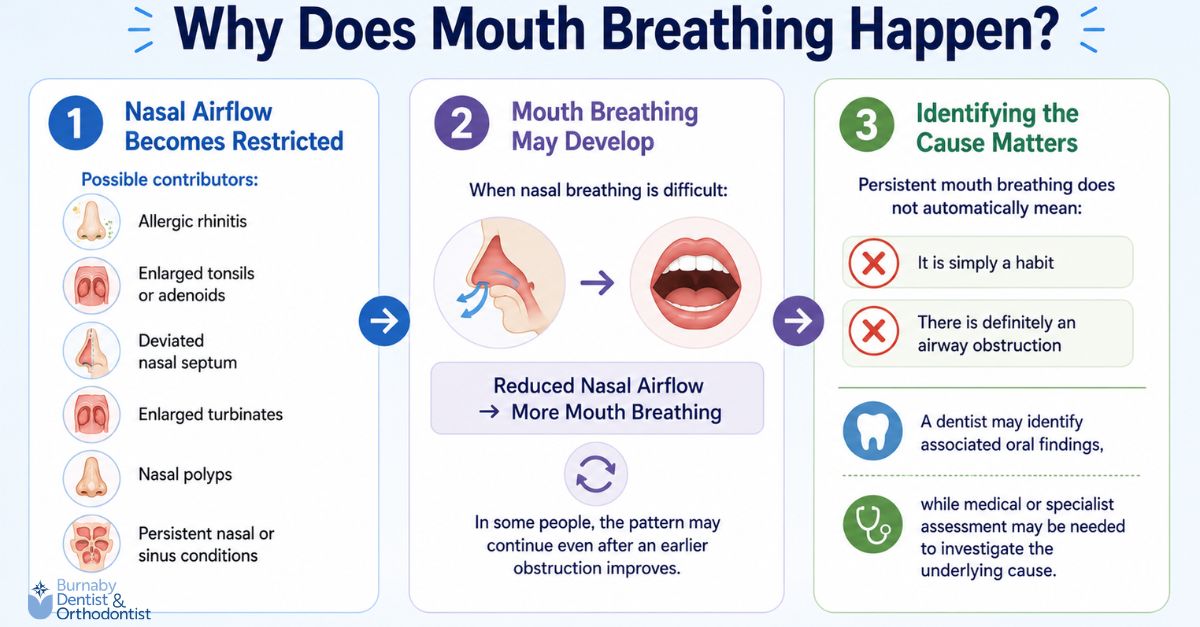
Persistent mouth breathing often develops when breathing comfortably through the nose is difficult. The underlying reason can differ from person to person, and identifying it matters because mouth breathing itself does not reveal what is restricting or altering the normal breathing pattern.
Possible contributors include:
- Allergic rhinitis or chronic nasal inflammation, which can cause congestion and reduce nasal airflow
- Enlarged adenoids or tonsils, particularly in children
- A deviated nasal septum, which may restrict airflow through one or both sides of the nose
- Enlarged nasal turbinates, which can contribute to nasal obstruction
- Nasal polyps or other structural abnormalities
- Sinus or persistent nasal conditions that interfere with comfortable nasal breathing
In children, enlarged adenoids and allergic rhinitis are commonly reported contributors to mouth breathing. However, the relative importance of each cause varies considerably between patients and study populations, so symptoms alone cannot determine the underlying problem.
When It Starts as Obstruction and Becomes Habit
Not everyone who regularly breathes through their mouth has an identifiable ongoing obstruction. Mouth breathing can sometimes persist even when obvious nasal obstruction is absent or after an earlier obstruction has improved.
For that reason, persistent mouth breathing should not automatically be treated as either just a habit or definitely an airway blockage. A dental examination can identify oral findings that may accompany mouth breathing, but determining whether allergies, enlarged adenoids or tonsils, nasal anatomy, or another medical issue is involved may require assessment by a specialist.
Signs You May Be a Mouth Breather Without Realizing It
Mouth breathing is not always obvious, particularly when it happens mainly during sleep. Possible clues include regularly waking with a dry mouth, sleeping with the mouth open, snoring, persistent nasal congestion, dry or cracked lips, and being observed breathing through the mouth. No single sign confirms chronic mouth breathing or identifies its cause.
Signs worth paying attention to include:
- Regularly sleeping with your mouth open
- Waking with a dry or sticky mouth
- Dry or cracked lips, especially in the morning
- Snoring or noisy breathing during sleep
- Frequent or persistent nasal congestion
- Being observed breathing through your mouth while awake or asleep
- Waking with a dry or sore throat
- Morning bad breath associated with oral dryness
- In children, frequently maintaining an open-mouth posture
Some dental findings, such as oral dryness or gingival inflammation, may also occur alongside mouth breathing. However, these findings have many possible causes and should not be used on their own to diagnose a breathing pattern.
If you recognize several of these signs, particularly persistent nasal obstruction or regular snoring, an assessment can help clarify what may be contributing. If you are unsure whether your symptoms are related to your teeth, gums, dry mouth, or another oral concern, our help me figure out what’s wrong with my teeth page can help you explore possible next steps.
Dry Mouth: The Mechanism Behind Many Dental Effects
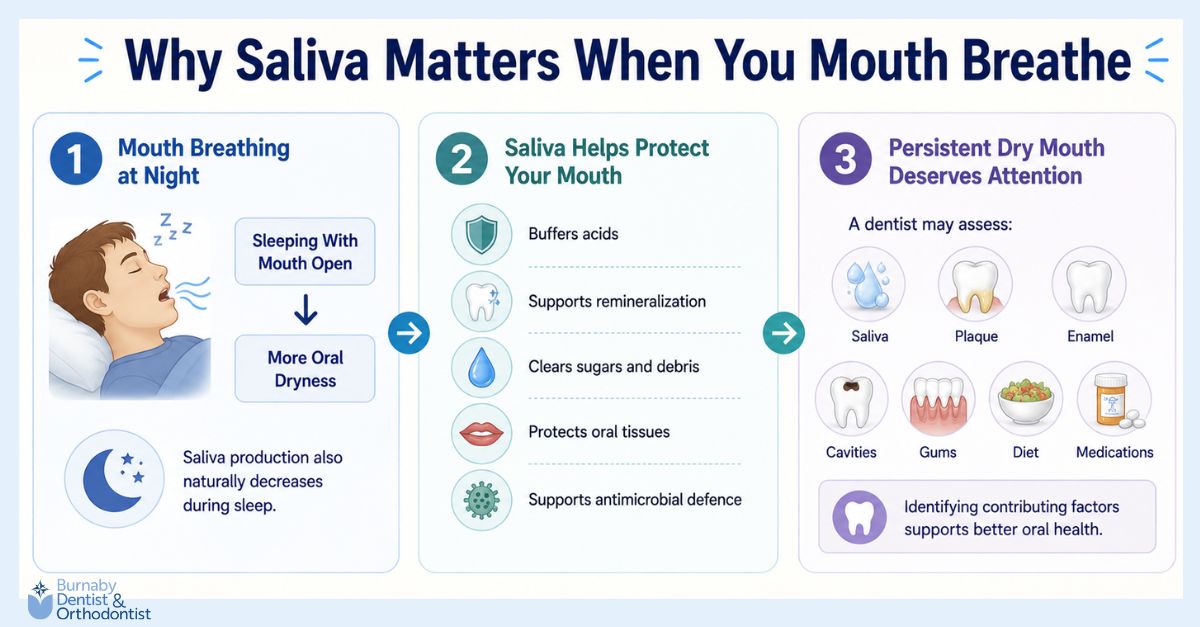
One of the most important oral-health concerns associated with persistent mouth breathing is dryness. This is particularly relevant at night, when salivary secretion is naturally lower. If sleeping with the mouth open contributes to a dry oral environment, some of saliva’s normal protective functions may be reduced.
This does not mean that mouth breathing automatically causes cavities or gum disease. Dental caries and periodontal diseases are multifactorial. However, inadequate saliva is a recognized risk factor for oral problems, including tooth decay, because saliva plays an important role in maintaining a healthy environment around the teeth and oral tissues.
What Saliva Is Actually Doing While You Sleep
Saliva does much more than keep your mouth comfortable. It helps protect oral health in several ways:
Buffers acids: Saliva helps neutralize acids produced by plaque bacteria and introduced through foods, drinks, or gastric contents.
Supports remineralization: Calcium and phosphate in saliva help replace minerals lost from enamel during early demineralization. Fluoride can further support this process.
Clears substances from the mouth: Salivary flow helps clear food debris, sugars, acids, and microorganisms from tooth surfaces.
Protects oral tissues: Salivary proteins and mucins lubricate and coat the mouth, helping protect soft tissues from physical, chemical, and microbial irritation.
Supports antimicrobial defence: Saliva contains proteins and other components involved in controlling microorganisms within the oral environment.
This helps explain why persistent morning dry mouth deserves attention. Rather than assuming mouth breathing is directly causing a particular dental disease, a dentist can assess salivary symptoms, plaque levels, enamel changes, cavities, gum health, medications, diet, and other risk factors together.
What Mouth Breathing Does to Your Teeth Over Time
The mouth breathing effects on teeth do not follow a fixed timeline, and research does not support predicting that a specific problem will develop after a certain number of weeks, months, or years.
Persistent mouth breathing may contribute to oral dryness, while prolonged dry mouth can reduce some of saliva’s protective effects. Other factors, including oral hygiene, diet, fluoride exposure, medications, salivary function, and existing dental conditions, also influence what happens over time.
A more accurate way to think about progression is:
How Mouth Breathing May Affect Oral Health Over Time | ||
|---|---|---|
| Timeframe | Changes That May Be Noticed | What It May Mean for Oral Health |
| Earlier Signs | Morning dry mouth, dry lips, sticky saliva, or morning bad breath | May indicate a persistently dry oral environment and warrants attention if it occurs regularly |
| With Persistent Mouth Breathing or Dryness | Plaque accumulation and gingival inflammation may be more noticeable in some people | Mouth breathing has been associated with these findings, while oral hygiene and other individual factors also influence gum health |
| Over the Longer Term | People with persistent dry mouth may have greater susceptibility to dental caries and enamel demineralization | Risk depends on salivary function along with diet, fluoride exposure, oral hygiene, medications, and other factors |
| During Childhood Growth | Certain dental arch and bite characteristics have been reported more often in children who chronically mouth breathe | These are associations, not inevitable outcomes, and development is influenced by multiple factors |
Can mouth breathing cause Cavities?
Mouth breathing is not considered a direct cause of cavities. However, persistent oral dryness associated with mouth breathing may reduce saliva’s protective effects and potentially contribute to higher caries risk.
Because dental caries has multiple causes, recurring cavities should not automatically be attributed to mouth breathing. A dentist can assess factors such as saliva, diet, plaque, fluoride exposure, medications, and oral hygiene, with medical referral when persistent breathing or nasal concerns also need evaluation.
What Mouth Breathing Does to Your Gums
Mouth breathing is associated with gingival inflammation, particularly in children and adolescents, but it should not be considered a direct cause of gum disease. When the mouth remains open for extended periods, oral dryness may affect the local environment around the gums, alongside the effects of dental plaque and other factors.
Gingival inflammation may be more noticeable around the front teeth in some people who mouth breathe. Possible signs include:
- Red or swollen gums
- Bleeding during brushing or flossing
- Tender or uncomfortable gums
- Visible plaque accumulation
- Localized areas of inflammation
These signs are not specific to mouth breathing and can occur for many reasons. Plaque biofilm remains central to plaque-induced gingivitis and periodontitis, while oral hygiene, smoking, diabetes, medications, and individual susceptibility can also influence periodontal health. If you want to learn more about preventing plaque buildup and supporting gum health, read about dental hygiene in Burnaby.
Mouth breathing should therefore be considered a possible contributing factor to the oral environment, rather than an independent cause of periodontitis.
If your gums repeatedly bleed or remain swollen, particularly alongside persistent dry mouth or mouth breathing, a dental examination can help identify possible contributing factors. Depending on the assessment, care may include improved plaque control, regular dental cleanings in Burnaby, management of dry mouth, or periodontal treatment when clinically appropriate.
Morning Bad Breath: Why Dry Mouth Can Play a Role
Morning bad breath is common, and dry mouth can make it more noticeable. Salivary flow naturally decreases during sleep. If sleeping with your mouth open contributes to additional dryness, saliva may be less effective at clearing debris and maintaining the oral environment.
Bad breath, or halitosis, is commonly associated with volatile sulphur compounds produced by bacterial activity in the mouth. Tongue coating, plaque, gum disease, tooth decay, dry mouth, and other factors can all contribute.
Mouthwash may temporarily improve breath, but it does not necessarily address the underlying cause. If morning bad breath occurs regularly with dry mouth, a dental assessment can help check for plaque on gums, gum disease, decay, tongue coating, reduced salivary function, and other possible contributors.
Persistent mouth breathing accompanied by nasal congestion or snoring may also warrant appropriate medical evaluation.
Mouth Breathing in Children: Why Early Detection Matters
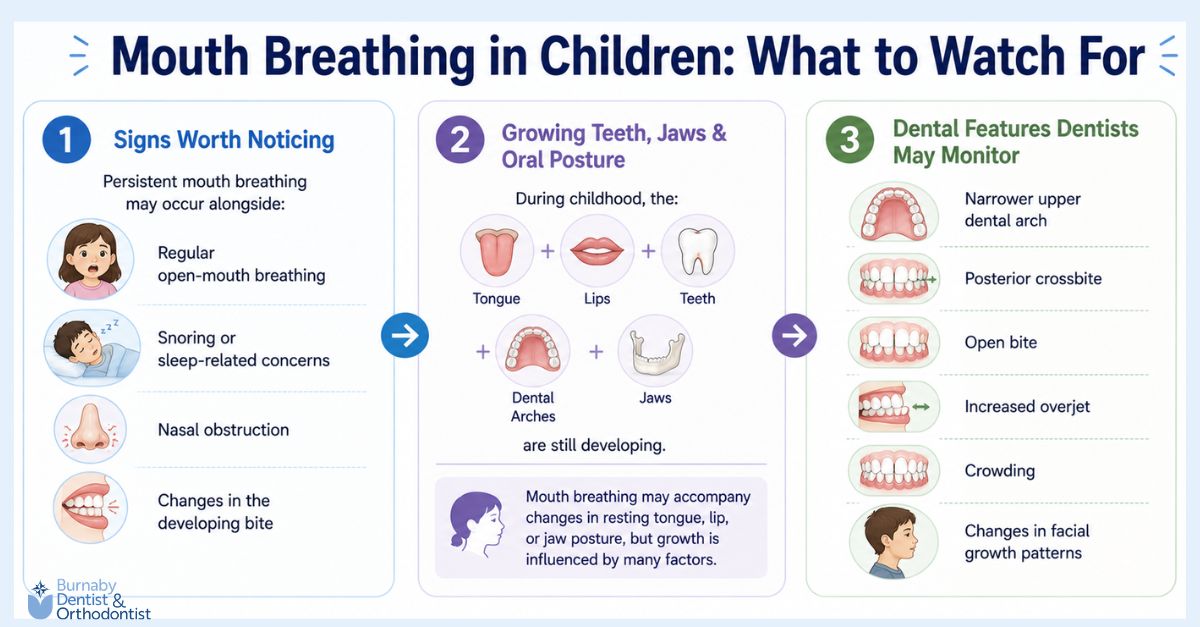
Persistent mouth breathing in a child is worth assessing because it can occur alongside nasal obstruction, snoring, sleep-related breathing concerns, and differences in dental or facial development. Our child dental exams in Burnaby can also help monitor the teeth, bite, and dental arches as a child grows, while our dental services for families in Burnaby provide broader care across different stages of life.
Mouth breathing does not mean that a child’s face or teeth will develop abnormally, but recognizing the pattern early can help identify dental concerns and determine whether medical evaluation is also appropriate.
During childhood, the jaws, dental arches, teeth, and surrounding muscles are still developing. Mouth breathing has been associated with certain differences in dentofacial development, including changes in dental arch dimensions and bite relationships. These relationships are multifactorial, so genetics, growth pattern, oral function, airway conditions, and other factors also need to be considered.
How Tongue Position Relates to a Growing Palate
The tongue normally rests within the oral cavity and interacts with the teeth and surrounding muscles as a child grows. Children who habitually mouth breathe may adopt a different resting posture of the lips, jaw, or tongue to maintain an open oral airway.
Altered oral posture has been proposed as one factor that may accompany differences in upper-arch development. However, it would be too strong to say that a low tongue position caused by mouth breathing directly makes the palate narrow or high. Palatal and facial growth are influenced by multiple biological and functional factors.
Bite Problems Associated With Mouth Breathing in Children
Certain dental and skeletal characteristics occur in association with chronic mouth breathing, including:
- Narrower upper dental arches
- Posterior crossbite
- Anterior open bite
- Increased overjet
- Certain patterns of increased lower facial height
- Dental crowding or altered tooth positioning
A narrow palate, open bite, crowding, or other bite difference does not establish that mouth breathing caused it. These characteristics can develop through a combination of genetics, growth patterns, oral function, airway conditions, and other influences.
Persistent mouth breathing is therefore best viewed as one potentially relevant factor in a child’s developing oral environment, rather than a single explanation for how the teeth, jaws, or face develop.
If bite or alignment concerns are identified, our orthodontic treatment guide explains the approaches that may be considered after an individual assessment.
Mouth Breathing, Braces, and Why Results Sometimes Relapse
Orthodontic results can change over time for many reasons, including continued growth, tissue adaptation, the original bite, treatment-related factors, and retainer use. Mouth breathing may be relevant to an orthodontic assessment, but it should not be considered a proven independent cause of orthodontic relapse.
Mouth breathing is associated with certain differences in dental arch form and bite relationships, particularly during childhood growth.
Oral posture and function may therefore be considered alongside tooth alignment, jaw development, and other individual factors when planning orthodontic care.
After braces or clear aligner treatment, retainers play an important role in maintaining tooth position. Teeth have a natural tendency to move after orthodontic treatment, and long-term stability cannot be predicted from breathing pattern alone.
If persistent mouth breathing is also present, identifying why it occurs can still be relevant to a person’s broader care. Nasal obstruction and other medical causes are addressed separately from orthodontic retention rather than assuming that correcting mouth breathing will prevent the teeth from moving.
Snoring and Sleep: When to Involve a Doctor, Not Just Your Dentist
Mouth breathing and snoring can occur alongside sleep-disordered breathing, a spectrum of breathing problems during sleep that includes obstructive sleep apnea (OSA). However, mouth breathing or snoring alone does not mean that you have sleep apnea.
Certain symptoms deserve closer attention, particularly when they occur together:
- Habitual loud snoring
- Witnessed pauses in breathing during sleep
- Gasping or choking during sleep
- Unrefreshing sleep
- Excessive daytime sleepiness or fatigue
- Morning headaches
In children, additional concerns can include difficulty breathing during sleep, daytime sleepiness, problems waking in the morning, attention or behavioural concerns, and bedwetting, although these symptoms can have causes unrelated to sleep-disordered breathing.
Dentists can play a useful screening role because oral examinations may identify features or symptoms that warrant further investigation. Screening, however, is different from diagnosis.
Obstructive sleep apnea is a medical condition, and suspected OSA requires appropriate medical assessment. Depending on the patient, diagnostic testing may include polysomnography or, for appropriate adults, a home sleep apnea test ordered and interpreted through medical care.
This distinction is especially important when mouth breathing occurs together with persistent snoring, witnessed breathing pauses, or significant daytime symptoms. The goal is not to assume that mouth breathing means sleep apnea, but to recognize when the overall symptom pattern may represent more than an oral-health concern.
Nasal Breathing vs. Mouth Breathing: A Side-by-Side Look
Nasal and mouth breathing both move air into the respiratory system, but they do not affect the upper airway and oral environment in exactly the same way. The nose is specialized to condition incoming air, while prolonged open-mouth breathing may contribute to oral dryness.
Key Differences Between Nasal and Mouth Breathing | ||
|---|---|---|
| Feature | Nasal Breathing | Mouth Breathing |
| Air Filtration | Nasal structures and mucus help trap inhaled particles | Bypasses much of the nose’s filtration pathway |
| Air Humidification | Helps humidify incoming air | Provides less of the conditioning normally performed by the nasal passages |
| Air Warming | Helps warm inspired air before it reaches the lower airway | Bypasses much of the nasal warming process |
| Nitric Oxide | Air passing through the nasal passages can carry nitric oxide produced in the upper airway | Does not use the nasal pathway in the same way |
| Oral Moisture | Allows the lips to remain closed more consistently during rest | Prolonged open-mouth posture may contribute to oral dryness |
| Dental Relevance | Does not expose the mouth to continuous respiratory airflow | Persistent dryness may reduce some of saliva’s protective effects |
| During Sleep | Salivary flow naturally decreases regardless of breathing route | Open-mouth breathing may occur alongside greater perceived oral dryness |
The most important dental distinction is therefore not that nasal breathing guarantees healthy teeth or that mouth breathing inevitably damages them.
Instead, persistent open-mouth breathing may contribute to a drier oral environment, and inadequate salivary protection is one factor that can influence oral health.
Likewise, intentionally forcing nasal breathing is not an appropriate solution when the nose is obstructed. Persistent difficulty breathing through the nose can have structural, inflammatory, or other medical causes that need to be considered separately from the dental effects.
Can the effects of mouth breathing be reversed?
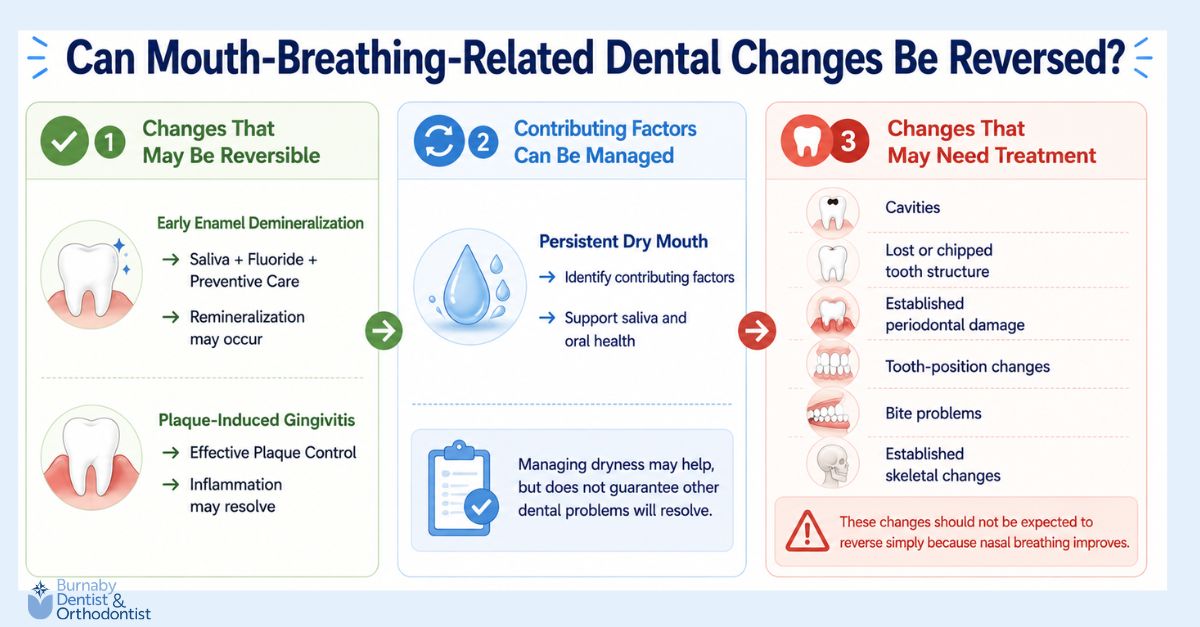
Some oral changes associated with mouth breathing or persistent dry mouth may improve when contributing factors are addressed, while established dental or orthodontic changes may require separate treatment.
Early enamel demineralization can potentially remineralize before a cavity forms, supported by saliva, fluoride, diet, and appropriate preventive care. Once tooth structure has been physically lost, however, it does not naturally grow back.
For parents interested in how fluoride can support cavity prevention, our page on fluoride treatment for kids in Burnaby provides more information about this preventive option.
Plaque-induced gingivitis can also resolve with effective plaque control when there has not been irreversible periodontal destruction. Managing persistent oral dryness may support overall oral health, but correcting dryness alone does not guarantee that inflammation will resolve. More advanced periodontal disease may require additional care, including scaling and root planing in Burnaby.
Changes in tooth position, bite, or jaw development should not be expected to reverse simply because nasal breathing improves. In growing children, identifying persistent mouth breathing and its underlying cause earlier may be useful, but treatment cannot guarantee a particular dental or facial development outcome.
In short, early mineral loss and gingivitis may be reversible under appropriate conditions, while cavities, lost tooth structure, and established orthodontic or skeletal changes may require additional care.
How Burnaby Dentist & Orthodontist Assesses the Dental Effects of Mouth Breathing
At Burnaby Dentist & Orthodontist, persistent mouth breathing can be considered as part of a broader dental assessment, especially when it occurs alongside dry mouth, gum inflammation, recurring dental concerns, or changes in a child’s developing bite.
During comprehensive dental exam in Burnaby, we can assess the teeth, gums, oral tissues, bite, dental arches, and signs of dry mouth. Depending on the individual findings, care may include:
- Managing caries risk with preventive care, including our fluoride treatments in Burnaby and dental sealants in Burnaby when clinically appropriate
- Addressing plaque and gingival inflammation with appropriate hygiene care
- Assessing persistent dry mouth and possible contributing factors
- Monitoring enamel demineralization and existing dental concerns
- Evaluating bite, crowding, crossbite, or other orthodontic concerns
- Using dental imaging and digital X-rays in Burnaby when clinically justified for a dental purpose
Persistent nasal obstruction, habitual snoring, witnessed breathing pauses, or other signs of possible sleep-disordered breathing may require referral to an appropriate medical professional. Our dental role is to recognize relevant oral findings, manage dental concerns, and help coordinate appropriate care rather than diagnose nasal disease or obstructive sleep apnea.
The Bottom Line: Your teeth are downstream of how you breathe
Persistent mouth breathing can contribute to oral dryness, which may reduce some of saliva’s protective functions. It is also associated with gingival inflammation and certain dentofacial characteristics, particularly during childhood growth. However, it should not be considered a single cause of cavities, gum disease, crooked teeth, or facial changes.
The underlying reason for mouth breathing matters. Nasal congestion, allergies, enlarged tonsils or adenoids, structural nasal concerns, and other factors may contribute, while snoring or other sleep-related symptoms may require medical investigation.
If you regularly wake with a dry mouth, notice persistent oral changes, or are concerned about a child who frequently mouth breathes, contact Burnaby Dentist & Orthodontist to book a comprehensive dental assessment. We can assess your teeth, gums, bite, and other oral findings and recommend appropriate next steps, including referral when concerns extend beyond dentistry.
This article is for educational purposes only and is not a substitute for an in-person dental examination, medical assessment, or individualized professional advice.
Is mouth breathing bad for your teeth?

Mouth breathing does not automatically damage teeth. However, persistent mouth breathing may contribute to oral dryness, which can reduce some of saliva's protective effects and become one factor affecting cavities, enamel, plaque, and gum health.
Why do I wake up with a dry mouth?
Salivary flow naturally decreases during sleep, and sleeping with your mouth open may contribute to additional dryness. Medications, dehydration, nasal congestion, and certain health conditions can also cause morning dry mouth.
How do I stop breathing through my mouth at night?
The appropriate approach depends on the cause. Allergies, congestion, enlarged tonsils or adenoids, and structural nasal problems may contribute. Addressing the underlying reason is more appropriate than simply forcing your mouth closed.
When should I see a dentist about mouth breathing?
Consider mentioning persistent mouth breathing when it occurs alongside recurring dry mouth, dental problems, gum inflammation, or concerns about a child's bite or dental development. Snoring, breathing pauses, or persistent nasal obstruction may also require medical assessment.
Can allergies cause mouth breathing?
Yes. Allergic rhinitis can cause nasal congestion and make nasal breathing more difficult, which may contribute to mouth breathing. Persistent allergy symptoms may require appropriate medical assessment and management.
Is occasional mouth breathing normal?
Occasional mouth breathing can happen during exercise or temporary nasal congestion and does not necessarily indicate a problem. A persistent pattern, particularly during sleep or when accompanied by other symptoms, may deserve closer attention.
Is mouth breathing the same as sleep apnea?
No. Mouth breathing and obstructive sleep apnea are not the same condition. Mouth breathing can occur alongside snoring and sleep-disordered breathing, but it cannot by itself establish that someone has sleep apnea.
Can adults develop chronic mouth breathing?
Yes. Adults may mouth breathe because of persistent nasal congestion, allergic rhinitis, structural nasal obstruction, or other factors affecting nasal airflow. Mouth breathing can occur during sleep, while awake, or both.