
CBCT (3D Scans) in Burnaby
Get CBCT (3D dental scans) in Burnaby for implants, orthodontics, and complex cases. Safe, accurate imaging in-house.

What our Patient Think About Us?
Posted on Google loveleen dhanoaTrustindex verifies that the original source of the review is Google. I was scheduled for full checkup and cleaning. Randeep was so sweet, polite and experienced. At every point of the appointment, she made sure that I knew what was happening and If I was in any pain. She made my experience very smooth and less scary. She did an amazing job on cleaning and explaining everything. Dr. Sasan explained clearly about what is needed or not about my dental insecurities. Front Staff was nice and polite. Highly recommended!Posted on Google James YipTrustindex verifies that the original source of the review is Google. Amazing staff and facilities here and had a great time doing regular check up and cleanings. Would love to be backPosted on Google fardad faridiTrustindex verifies that the original source of the review is Google. Thanks for your good servicePosted on Google Alyoshka MyshkoTrustindex verifies that the original source of the review is Google. Posted on Google Carlotta CrestanelloTrustindex verifies that the original source of the review is Google. The best experience!! I was so nervous for my wisdom tooth extraction and the whole staff was so supportive. Highly recommended, everyone should feel like this when they go to the dentist. I ended up having fun!!!Posted on Google Sunny Lee-GordonTrustindex verifies that the original source of the review is Google. Ghazal was informative and caring! Loved my cleaning session with her :) definitely will come back!Posted on Google Elan AsselstineTrustindex verifies that the original source of the review is Google. Have come here for several years and now come with my kids (7 and 4), great experience, very friendly.Posted on Google Andrew WuTrustindex verifies that the original source of the review is Google. Patient and kind with their service. Much needed when it comes to teeth cleaningPosted on Google Layla SongTrustindex verifies that the original source of the review is Google. The dentist was professional and gentle – the whole experience was smooth and comfortable. Highly recommend!Posted on Google Jas JaskaranTrustindex verifies that the original source of the review is Google. Great service, staff and doctor are friendly. They’re giving very open and transparent service so feel comfortable with all the procedures and treatments.
CBCT (3D Scans) for Accurate Dental Diagnosis in Burnaby
At Burnaby Dentist & Orthodontist, we use Cone Beam Computed Tomography (CBCT) to provide 3D dental imaging for precise diagnosis and treatment planning.
A CBCT scan produces a detailed three-dimensional view of the teeth, jawbone, nerves, sinuses, and surrounding structures, revealing important information that traditional 2D dental X-rays cannot.
CBCT (3D scans) are commonly recommended for procedures such as dental implants, orthodontic treatment, wisdom teeth assessment, and complex diagnostic cases. By seeing the full anatomy in 3D, dentists can plan treatments more accurately, reduce risks, and deliver informed and careful treatment planning.
As a modern, diagnostic-focused clinic, Burnaby Dentist & Orthodontist uses CBCT technology to support clear diagnoses and informed treatment decisions, helping patients feel confident every step of the way.

What Is a CBCT (Cone Beam CT) Scan?
A CBCT scan is an advanced dental imaging technology that provides a complete 3D view of oral and facial structures, allowing dentists to diagnose and plan treatment with far greater precision than standard X-rays.
Definition and How CBCT Technology Works
CBCT stands for Cone Beam Computed Tomography. It uses a cone-shaped X-ray beam that rotates once around the head to capture hundreds of images in a single scan. These images are digitally reconstructed into a high-resolution, three-dimensional model of the teeth, jaw, and surrounding anatomy. The scan is quick, non-invasive, and provides detailed information from multiple angles at once.
Difference Between CBCT and Traditional Dental X-Rays
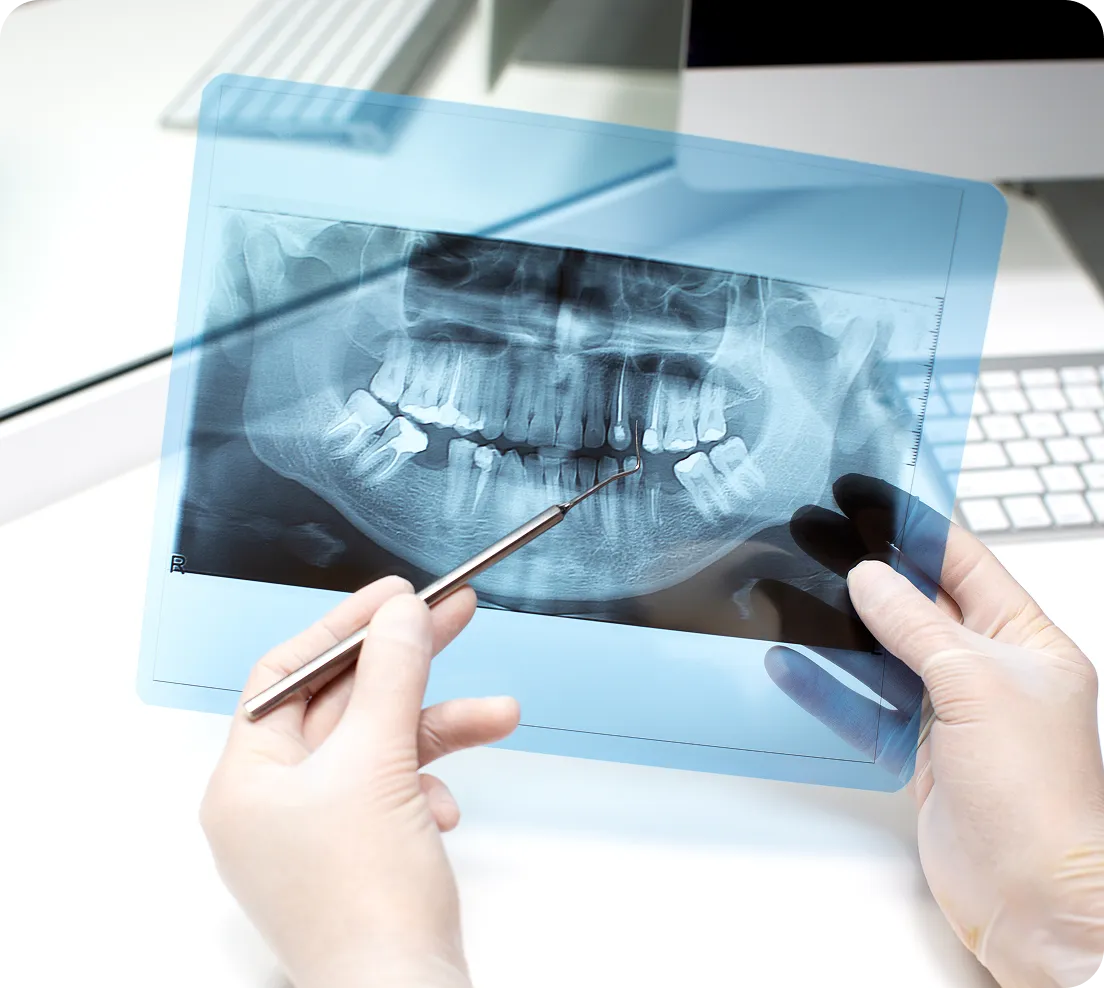
views. While useful for routine exams, they have limitations when depth, exact positioning, or complex anatomy is involved. A CBCT scan provides true 3D imaging, making it especially valuable when standard X-rays cannot clearly show nerve pathways, bone thickness, or the exact position of impacted teeth. In these cases, 2D imaging may not provide enough information for safe planning.
What a 3D Scan Allows Dentists to See
A CBCT scan allows dentists to clearly view teeth and roots, bone structure and density, nerves, sinuses, jaw joints (TMJ), and their spatial relationships. This depth and clarity help identify issues that may be hidden on traditional X-rays and support safer, more accurate diagnosis and treatment planning.
When Is a CBCT Scan Recommended?
Here are some common situations where a CBCT (3D) scan may be recommended to ensure the best possible outcome for your dental care.


CBCT for Dental Implants and Bone Assessment
CBCT imaging allows dentists to evaluate bone height, width, and density before placing dental implants. It also clearly maps the location of nearby nerves and anatomical structures, helping ensure implants are placed safely and accurately while minimizing the risk of complications.

CBCT for Orthodontic Planning
For orthodontic treatment, CBCT scans provide detailed insight into jaw growth, tooth positioning, and overall facial structure. They can also be used to assess airway space when needed. This information supports more precise planning for braces or clear aligners and helps achieve stable, long-term results.

CBCT for Wisdom Teeth and Impacted Teeth
When wisdom teeth are impacted or difficult to assess, CBCT scans show their exact position in relation to nerves and sinuses. This helps dentists evaluate surgical risk, plan extractions more safely, and reduce the chance of nerve injury or sinus complications.

CBCT for Jaw Joint (TMJ), Sinus, and Airway Evaluation
CBCT imaging is useful for evaluating jaw joint (TMJ) disorders, sinus conditions that may affect dental treatment, and airway anatomy. These detailed views help identify structural issues that may contribute to pain, discomfort, or functional problems.

CBCT for Root Canal Complications and Infections
In endodontic cases, CBCT scans can reveal hidden canals, root fractures, cysts, abscesses, or infections that may not appear on traditional X-rays. This is especially helpful when diagnosing the cause of persistent pain or planning complex root canal treatment.
At Burnaby Dentist and Orthodontist Clinic
Begin Your Smile Journey with Dr. Hadianfar

Why CBCT Scans Improve Diagnostic Accuracy?
By showing the full anatomy in three dimensions, CBCT scans help reduce uncertainty and support safer, more predictable outcomes, especially in complex cases. Below are some of the key ways CBCT technology improves diagnostic accuracy and treatment planning.

Identifying Nerve Location and Bone Density
CBCT scans clearly map the position of nerves and measure bone density with precision. This is especially important for surgical procedures such as dental implants and wisdom tooth removal. With this information, dentists can plan treatments more accurately, reduce surgical risk, and avoid damage to critical structures.

Detecting Hidden Pathology and Structural Issues
Many dental issues are difficult or impossible to see on standard 2D X-rays. CBCT imaging can reveal hidden infections, fractures, cysts, bone defects, and other structural problems at an early stage. Early detection allows for timely intervention and helps prevent complications before they become more serious.

Role of CBCT in Complex Treatment Planning
For complex or multi-disciplinary treatments, such as cases involving implants, orthodontics, endodontics, or oral surgery, CBCT scans provide a reliable diagnostic foundation. Having a full 3D view reduces unexpected findings during treatment, improves coordination between providers, and leads to smoother, more efficient care.

Are CBCT (3D Scans) Safe?
Yes. CBCT (3D) scans are considered safe when used appropriately and are designed specifically for dental diagnostics. Modern dental CBCT systems prioritize low radiation exposure while delivering the detailed information needed for accurate and responsible care.
Understanding Radiation Levels in CBCT Imaging
Dental CBCT scans use low-dose radiation, carefully optimized for oral and facial imaging. Unlike broad imaging scans, CBCT technology often uses a limited field of view, meaning only the area needed for diagnosis is scanned. This focused approach helps minimize radiation exposure while still providing high-quality, detailed images.
Safety Protocols and Protective Measures
CBCT scans are only recommended when the diagnostic benefits outweigh the risks. Dentists follow strict justification guidelines before ordering a scan. When imaging is performed, protective measures such as patient shielding and optimized exposure settings are used to keep radiation levels as low as reasonably achievable.
Health Canada, CDA, and BCDA Guidelines for CBCT Use
CBCT imaging is used in accordance with guidelines from Health Canada, the Canadian Dental Association, and the British Columbia Dental Association. These organizations emphasize evidence-based use, proper training, and patient safety, ensuring CBCT scans are performed responsibly and only when clinically necessary.
How CBCT Compares to Medical CT Scans
A dental CBCT scan delivers significantly less radiation than a hospital-based medical CT scan. While both technologies use X-rays to create detailed images, they are designed for very different purposes and scopes of imaging.
Medical CT scans are intended to examine large areas of the body, such as the head, chest, or abdomen, and therefore require higher radiation levels to capture sufficient detail. In contrast, dental CBCT imaging is highly targeted and focused specifically on the teeth, jawbone, nerves, sinuses, and surrounding oral structures.
Key differences include:
Smaller imaging area: CBCT scans focus only on the region needed for dental diagnosis
Lower radiation dose:Optimized specifically for dental and maxillofacial imaging
Dental-specific detail:Provides precise views of oral anatomy without unnecessary exposure
Because of this targeted design, CBCT scans are both efficient and appropriate for dental care. They provide the detailed information dentists need for safe and accurate treatment planning, while keeping radiation exposure as low as reasonably possible for patients.
What to Expect During a CBCT Scan Appointment?
A CBCT scan is a quick, straightforward procedure designed to be comfortable and stress-free. Knowing what to expect can help ease any anxiety and ensure a smooth experience.
Step-by-Step CBCT Scan Process
A CBCT scan is quick and simple, with minimal preparation required. To ensure clear and accurate images, you may be asked to remove glasses, jewelry, or any metal objects around the head and neck area.
Here’s what the process typically involves:
1
Positioning
You will be comfortably positioned either standing or seated, depending on the type of scan being performed. Your head will be gently stabilized to prevent movement.
2
The Scan
The CBCT machine rotates once around your head, capturing detailed images from multiple angles. The scan itself takes only a few seconds.
3
Image Capture
All necessary images are collected in a single rotation, allowing for precise 3D reconstruction without repeated scans.
Comfort and Safety for Adults and Children
CBCT scans are completely non-invasive and painless. There are no injections, needles, or physical discomfort involved. The procedure is safe for both adults and children when clinically appropriate, making it suitable for family dental care.
Immediate Image Capture and Review
Images are captured instantly and available for review right away. Your dentist can assess the 3D images promptly, explain the findings, and use the information to plan or confirm your treatment with greater accuracy.
CDCP
Important Information for CDCP Patients
Treatment under the Canadian Dental Care Plan is not fully covered. A co-payment will apply.

How CBCT Scans Support Treatment Planning?
By clearly visualizing your anatomy before care begins, CBCT imaging helps guide safer, more effective treatment decisions. Here are some of the key ways CBCT supports advanced treatment planning.

CBCT in Implant Planning and Surgical Guides
CBCT scans allow for precise digital planning of dental implant placement by showing bone volume, density, and nerve locations in three dimensions. This information can be used to plan implant positioning virtually and, when appropriate, create surgical guides that improve accuracy, reduce surgical time, and support predictable outcomes.

CBCT in Orthodontics and Smile Design
In orthodontic care, CBCT imaging helps dentists and orthodontists understand tooth position, jaw relationships, and facial structure in detail. This leads to more predictable tooth movement, better treatment sequencing, and improved long-term stability for braces or clear aligner therapy.

CBCT for Endodontic and Surgical Decision-Making
For root canal treatment and dental surgery, CBCT scans provide clarity that supports confident decision-making. Dentists can identify complex root anatomy, fractures, or infections and plan surgical approaches with greater precision, reducing the likelihood of complications and unexpected findings during treatment.

Benefits of CBCT (3D Scans) for Patients
CBCT (3D) scans are not just beneficial for dentists, they provide clear, meaningful advantages for patients by improving understanding, safety, and confidence throughout the treatment process.

Clear Visual Explanations for Patients
- 3D images make it easier for patients to see and understand their dental condition. Instead of relying on flat images or descriptions, dentists can show exact areas of concern, helping patients make informed decisions and give confident, well-informed consent.

Fewer Complications and Unexpected Findings
- Because CBCT scans reveal critical details that standard X-rays may miss, treatment can be planned more accurately from the start. This reduces risk, minimizes surprises during procedures, and leads to more predictable, successful outcomes.

Better Communication Between Dentist and Patient
- CBCT imaging supports open, transparent communication. With a shared 3D view of the problem and the plan, patients and dentists can collaborate more effectively, building trust and ensuring everyone is aligned on treatment goals and expectations.
Integrating CBCT into Comprehensive Dental Care
CBCT (3D) imaging is most effective when used as part of a complete, balanced diagnostic approach. At Burnaby Dentist & Orthodontist, CBCT scans are thoughtfully integrated into overall dental care to support accurate diagnosis, informed planning, and long-term oral health.


CBCT Alongside Exams and Digital X-Rays
CBCT scans are used alongside comprehensive dental exams and digital X-rays, not as a replacement. While routine X-rays remain ideal for many situations, CBCT imaging is reserved for cases where additional detail is clinically necessary. This ensures diagnostics are thorough without being excessive.

From Diagnosis to Treatment: A Complete Workflow
CBCT imaging supports a seamless workflow from scan to plan to treatment. The detailed 3D information helps dentists move confidently from diagnosis into precise treatment planning and execution, ensuring continuity of care and fewer unexpected findings along the way.

Digital Records for Ongoing Dental Monitoring
CBCT scans become part of your secure digital dental record, allowing for long-term tracking and comparison over time. This supports future treatment planning, monitoring of changes, and more proactive, personalized dental care as your needs evolve.
Patient-Centered Care Through Advanced Imaging
At our clinic, CBCT scans are part of our commitment to providing the highest standard of dental care—combining cutting-edge technology with personalized attention to your needs.
Why Choose Our Clinic for CBCT Scans?
Choosing where to have a CBCT (3D) scan matters. At Burnaby Dentist & Orthodontist, advanced technology is paired with clinical expertise and a patient-first approach to deliver accurate, reliable diagnostic care for the Burnaby community.
In-House CBCT Imaging Technology
Our clinic offers in-house CBCT imaging using modern, high-resolution equipment. This allows scans to be taken quickly and conveniently during your visit, without the need for external referrals.

Dentists Trained in Interpreting 3D Diagnostics
CBCT scans are only as effective as their interpretation. Our dentists are trained in 3D diagnostics and use their clinical expertise to analyze scans accurately, ensuring findings are translated into safe, well-planned treatment decisions.

Family-Friendly, Centrally Located Burnaby Clinic
Conveniently located in Burnaby, our clinic is easily accessible for individuals and families alike. We provide a comfortable, welcoming environment and comprehensive care under one roof, making advanced diagnostic imaging simple and stress-free for local patients.

Cost, Insurance Coverage, and Booking Information

We aim to make CBCT (3D) scans accessible, transparent, and easy to schedule, so you can move forward with care confidently and without unnecessary delays.
Pacific Blue Cross
Sun Life
Manulife
Green Shield
Canada Life
And More...
We also accept CDCP, with a patient co-pay where applicable.
When permitted by your provider, we direct bill insurance to reduce out-of-pocket costs. Some plans do not allow direct billing, in which case our team will clearly explain next steps.
For patients without dental insurance, we offer transparent pricing and value-based care, making advanced diagnostic care more manageable.
Are CBCT Scans Covered by Dental Insurance?
CBCT scans are often covered by dental insurance when they are clinically necessary for diagnosis or treatment planning, such as for implants, orthodontics, or surgical procedures. Coverage can vary by plan, and some insurers may require pre-authorization. Our team is happy to help review your benefits and guide you through the process.
How to Book a CBCT Scan in Burnaby?
Booking a CBCT scan is simple. You can schedule an appointment by contacting Burnaby Dentist & Orthodontist directly or by booking an online consultation. Our team will confirm whether a CBCT scan is appropriate for your needs, review insurance details, and help you take the next step toward informed, confident dental care.
FAQs
Does a CBCT scan hurt?

No. CBCT scans are completely non-invasive and painless, with no needles or injections involved.
Is CBCT imaging safe for children?

Yes, when clinically necessary. Dentists use the lowest effective radiation dose and a limited field of view, making CBCT safe for children when appropriate.
Do I need a CBCT scan for dental implants?

In most implant cases, yes. CBCT scans allow dentists to assess bone quality and nerve locations to ensure safe and precise implant placement.
Are CBCT scans used for orthodontics and braces?

Yes. CBCT imaging can help evaluate jaw structure, tooth position, and airway space, supporting accurate orthodontic planning and long-term stability.
Can CBCT scans detect problems that regular X-rays miss?

Yes. CBCT scans can reveal hidden infections, fractures, cysts, impacted teeth, and other issues not visible on standard X-rays.
Will my dental insurance cover a CBCT scan?

Coverage depends on your insurance plan and clinical necessity. Many plans cover CBCT scans when required for treatment planning. Our team can help verify your benefits.

Contact Us Today!
Contact Burnaby Dentist and Orthodontist About CBCT (3D Scans) in Burnaby
- Straighten crooked and misaligned teeth
- Conceal chips, cracks, and discoloured teeth
- Whiten and brighten your smile
- Take years off the look of your teeth
- Boost your self-esteem!
Monday
9 AM – 5 PM
Tuesday
8 AM – 5 PM
Wednesday
9 AM – 6 PM
Thursday
9 AM – 5 PM
Friday
9 AM – 5 PM
Saturday
9 AM – 4 PM