

Dental bridges are built to last, yet many patients still wonder: “How long should mine really hold up?” or “Is there anything I should be doing differently to protect it?” The truth is simple: a well-made bridge can stay strong for well over a decade, sometimes much longer, if you follow the right care habits and get routine checkups.
Most early failures come from preventable issues such as gum changes, bite pressure, or buildup around the abutment teeth.
At Burnaby Dentist & Orthodontist, we use 3D scans and bite mapping to design bridges that last, then guide you through maintaining them for decades. The goal is long-term stability: a secure bite, healthy supporting teeth, and a natural look that doesn’t fade with time.
If you are an adult in Burnaby who already has a bridge or are thinking about getting one, this guide is for you. It’s especially helpful if you’re comparing dental bridges in Burnaby with implants, noticing early wear or looseness, or simply want to protect the dental work you’ve already invested in.
At a Glance:
Dental bridges typically last 5–15 years, and many last longer with proper care. Their lifespan depends on material choice, oral hygiene, bite forces, and regular dental checkups. Daily flossing, avoiding hard foods, wearing a nightguard (if you grind), and seeing your dentist every six months are key to extending bridge life. Watch for early signs like looseness, sensitivity, gum recession, or bad odor. These often signal the bridge needs repair or replacement.
At Burnaby Dentist & Orthodontist, advanced tools like CBCT 3D scans, digital bite mapping, and coordinated hygiene and restorative follow-ups help keep your bridge stable, comfortable, and long-lasting.
Realistic Lifespan of Dental Bridges
Most dental bridges last 5 to 15 years, though some can function well for 20 years or more with proper care. While bridges aren’t permanent, they’re far from temporary and with today’s materials and digital planning, they’re more durable than ever.
Some patients may need a replacement sooner due to normal wear or shifting teeth, but many enjoy a decade or more of comfort and function. The key is regular dental monitoring and knowing what signs to watch for.
At Burnaby Dentist & Orthodontist, our family dental services in Burnaby focus on maximum longevity through precise placement and a clear maintenance plan from day one.

Begin Your Smile Journey With Dr. Sasan Hadianfar
What Affects Dental Bridges Longevity Most
Do you need a checklist to understand what truly determines whether your bridge lasts 10 years or longer? These are the factors that matter most:

1. Bridge Material
Material choice directly impacts durability.
PFM bridges combine strength with natural aesthetics.
Zirconia and all-ceramic bridges offer excellent appearance and strong performance, though not always ideal for heavy bite forces.
Full metal bridges deliver the longest lifespan where appearance is less critical.
As part of our restorative dental services in Burnaby, accurate placement also matters, ill-fitting bridges trap bacteria, increasing the risk of decay or gum irritation around abutment teeth.
2. Daily Hygiene Routine
Plaque builds up around the margins and under the pontics. Without good hygiene, decay or gum disease can undermine the supporting teeth. Brushing with fluoride toothpaste and using floss threaders or water flossers helps maintain long-term stability.
3. Diet, Hard Foods, and Grinding
Grinding, clenching, or chewing hard/sticky foods adds unnecessary stress. These forces can loosen the cement or cause chips. A nightguard is recommended for anyone with bruxism.
4. Frequency of Professional Exams
Regular checkups catch early signs of cement failure, bite shifts, or gum changes before they shorten the bridge’s lifespan.
At Burnaby Dentist & Orthodontist, we use digital imaging and routine bite evaluations to track your bridge over time, allowing us to intervene early and keep it functioning longer.
Which Dental Bridge Material Lasts the Longest?
Choosing the right bridge material plays a major role in how long your restoration stays strong, secure, and natural-looking. Here are the main material options patients consider, each offering different strengths in appearance, durability, and overall performance.
PFM (Porcelain-Fused-to-Metal) Bridge
PFM bridges combine a durable metal core with a porcelain exterior, creating a natural-looking restoration supported by strong internal structure.
This design handles everyday biting forces well and remains one of the most dependable choices for both front and back teeth. However, the porcelain layer can chip under heavy pressure, and it doesn’t match the translucency of newer all-ceramic materials.
In some cases, a faint metal line may appear at the gumline over time. Despite these considerations, PFM bridges continue to be a trusted option for patients who want a reliable balance between aesthetics and durability.
Zirconia Bridge
Zirconia bridges are crafted from a high-strength ceramic known for its toughness and clean, natural appearance. They handle chewing and grinding exceptionally well while remaining metal-free and biocompatible, making them ideal for patients who want both durability and a modern aesthetic.
Zirconia tends to be heavier and less flexible during adjustments, and not every bite pattern is suited for this material without detailed analysis. When properly planned, zirconia bridges can provide a long-lasting solution.
All-Ceramic Bridge
All-ceramic bridges prioritize aesthetics, offering a level of translucency that closely mimics natural enamel. They’re especially well-suited for front teeth and smile-focused areas, and they’re an excellent option for people with metal sensitivities.
Because they lack the internal metal reinforcement of PFM restorations, all-ceramic bridges are more prone to chipping or wear when placed under significant biting forces.
For that reason, they’re not typically used for molars or high-pressure zones, but they remain a top choice when appearance is the main concern.
Full Metal Bridge (Gold or Alloy)
Full metal bridges, made from gold or other strong alloys, are valued for their unmatched durability. They stand up to heavy chewing forces with ease, resist chipping, and are gentle on opposing teeth. While they excel in function, their metallic appearance makes them unsuitable for visible areas of the smile.
Some patients may also have sensitivities to specific alloys, and the overall look is less aesthetic than ceramic choices. These restorations are ideal for individuals
who prioritize maximum strength and longevity, particularly for bridges placed on back teeth.
Why Bite Analysis Matters for a Long-Lasting Dental Bridge
The material you choose matters, but how your bridge fits matters just as much. Even the strongest material can fail early if the bite isn’t properly balanced.
Every bite produces pressure. If too much force hits one part of the bridge or the supporting teeth, it can lead to:
- Chipping or cracking
- Cement loosening
- Gum irritation
- Premature wear
- Stress on abutment teeth
A bridge designed without precise bite alignment usually doesn’t perform well long-term.
Accurate design ensures that:
- Bite pressure is evenly distributed
- The pontic sits correctly without irritating gum tissue
- Abutment teeth are stable and protected
- The bridge functions naturally during eating and speaking
This is why advanced imaging and careful planning play a major role in durability.
At Burnaby Dentist & Orthodontist, we use CBCT imaging and digital bite analysis to create a bridge that fits your natural bite with precision. This reduces stress on the restoration, minimizes long-term complications, and supports a comfortable, lasting result.
Daily & Professional Maintenance Tips That Extend Bridge Longevity
You don’t need a complicated routine to protect your dental bridge, just a consistent one. The patients who keep their bridges strong for 15+ years aren’t doing anything extreme; they’re doing the basics, correctly and consistently.
Checklist for daily bridge care:
- Floss under the pontic every day using a floss threader or water flosser to remove hidden plaque.
- Brush twice daily with fluoride toothpaste to protect the abutment teeth from decay.
- Avoid sticky or hard foods that can stress the bridge or weaken the cement holding it in place.
- Wear a nightguard if you grind or clench, bruxism is one of the fastest ways to damage a bridge.
- Use an antibacterial mouth rinse if recommended by your dentist to reduce plaque and inflammation.
- Attend dental visits every 6 months so your dentist can monitor bite pressure, gum health, and cement stability.
Professional Care Matters
Even with perfect home care, professional cleanings are essential. They remove plaque and tartar from around the abutment teeth, the part most likely to affect your bridge’s lifespan.
Regular checkups also allow your dentist to catch early signs of loosening, gum changes, or bite shifts before they become expensive repairs.
At Burnaby Dentist & Orthodontist, our hygiene team uses detailed imaging and gentle cleaning techniques to keep the supporting teeth and gums healthy, ensuring your bridge stays secure long-term.
Signs Your Dental Bridge Needs Attention
Dental bridges rarely fail without warning. The trick is knowing what to look for before the problem becomes urgent.
Early detection is the difference between a minor repair and a full replacement.
1. Unusual Sensitivity or Discomfort
If you start feeling pain or sensitivity near your bridge, especially to hot or cold, it may be a sign of underlying gum inflammation or decay beneath an abutment crown. This discomfort usually won’t resolve on its own.
2. Looseness or Subtle Shifting
A dental bridge should feel solid. If you notice even a slight wobble when chewing or brushing, it may indicate that the cement is weakening or that the supporting tooth is compromised.
3. Swollen or Receding Gums Near the Bridge
Puffy, red, or bleeding gums are early signs of bacterial buildup. Left unchecked, this can progress to gum disease, which jeopardizes the supporting teeth and shortens your bridge’s lifespan.
4. Chips or Cracks in the Bridge
A small chip or fracture can weaken the entire structure. Even a minor crack affects how the bridge handles biting forces and can worsen quickly. Chips also create rough edges that trap food and bacteria, increasing the risk of gum irritation or decay.
5. Food Getting Trapped Frequently
If you’re noticing food consistently getting stuck around or under the bridge, your fit may have changed. Gum recession, cement weakening, or slight shifts in your bite can create new spaces where bacteria collect. This leads to irritation, odors, and increased decay risk.
6. Difficulty Chewing or a Change in Bite
If food feels harder to chew or your bite feels “off,” your bridge may be wearing unevenly or shifting slightly. These changes are subtle at first but can lead to larger alignment issues.
These symptoms aren’t normal signs of ‘settling in.’ If you notice any of them, schedule a visit with your dentist. At Burnaby Dentist & Orthodontist, we perform detailed evaluations to catch problems early and help extend the life of your dental bridge.
When a Dental Bridge Needs Replacing
No dental bridge lasts forever, but knowing when it’s time to replace one can make the difference between a smooth transition and a costly emergency.
Here are the most common signs your bridge may be nearing the end of its lifespan:
Visible Damage or Wear
Chipped porcelain, worn biting surfaces, or exposed metal beneath the ceramic are all signs that your bridge has deteriorated. These changes not only affect the look of your smile but also open the door to bacteria, plaque buildup, and decay around abutment teeth.
Persistent Discomfort or Pain
A well-fitting bridge should feel natural and comfortable. If you begin noticing persistent pain, especially when chewing, it often signals an underlying issue.
The bridge may have shifted, the bite may no longer be balanced, or decay and gum disease may be forming beneath the crowns that support the bridge. These conditions threaten the stability of the abutment teeth.
Movement or Looseness
A dental bridge should feel secure, never wobbly. If your bridge shifts or rocks when you chew or floss, the cement bond may be failing, or the abutment teeth underneath could be compromised. This is one of the clearest signs it’s time for replacement.
Gum Inflammation or Recession
Healthy gums are essential for supporting a bridge. If you notice redness, swelling, tenderness, or recession around the bridge, it may indicate gum disease or irritation caused by trapped bacteria. Receding gums can expose parts of the bridge design that were never meant to be exposed, leading to sensitivity and infection risk.
Advanced gum issues also weaken the foundation that holds your bridge in place, making replacement necessary to restore stability.
Unpleasant Odor or Taste
A persistent unpleasant odor or taste, especially when accompanied by difficulty cleaning under the bridge, can signal that bacteria are accumulating beneath it.
This often happens when the seal weakens or gums pull back, creating small pockets where food becomes trapped. Even strong home hygiene may not resolve this if the underlying fit has changed. Ignoring these signs can allow decay or infection to take hold beneath the bridge.
Visible Gaps or Spaces
Your bridge should sit flush against the gumline with no visible spacing. If you start to see gaps forming, it means the bridge is no longer fitting the way it once did.
These spaces are ideal traps for food particles and bacteria, increasing the risk of cavities, gum disease, and irritation. Gaps can also affect your bite, leading to discomfort or speech changes.
Age of the Bridge
Bridges that are more than a decade old deserve a closer look. Even well-maintained bridges begin to show signs of wear after 10 to 15 years. Regular dental visits can help monitor subtle changes in fit and structure before problems escalate.
At Burnaby Dentist & Orthodontist, we take a proactive approach to bridge care. Our team closely monitors bite alignment, gum health, and overall stability to help you plan ahead, before a replacement becomes urgent.
Typical Replacement Timeline for Dental Bridges
Understanding when a bridge may need attention helps you stay ahead of problems and avoid unexpected failures. While every patient is different, most bridges follow a predictable maintenance pattern:
- 5–10 Years (Minor Adjustments or Recementing): Small issues like slight bite changes or cement weakening can appear. Simple adjustments or recementing usually restore comfort and stability.
- 10–15 Years (Check for Material Wear): As the bridge ages, the materials may show surface wear or weakening. Your dentist will evaluate chips, bite changes, or strain on the supporting teeth to decide whether continued monitoring or planned replacement is best.
- 15–20+ Years (Full Structural Review): Long-term pressure, gum changes, and natural aging of the materials mean a thorough assessment is needed. Even if the bridge looks fine, internal fatigue or support issues may make replacement the safest choice.
Dental Bridge vs. Implant: Which Lasts Longer?
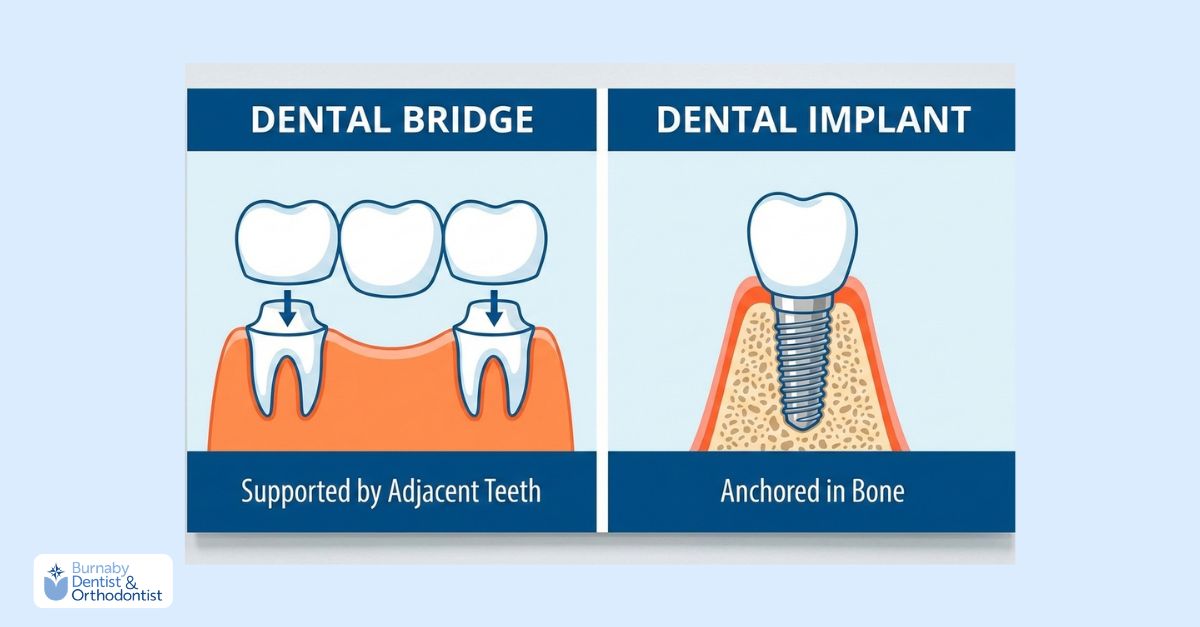
Dental bridges and dental implants in Burnaby both restore function and appearance, but they differ significantly in long-term performance, maintenance needs, and suitability for different patients. Understanding these differences helps you choose an option that matches your health, budget, and long-term goals.

Longevity Comparison
Dental bridges typically last about 5–15 years, depending on the materials used and the health of the supporting teeth.
Because bridges rely on adjacent natural teeth, their lifespan shortens if those teeth experience decay, gum disease, or stress from chewing or grinding. Bridges can also wear down or lose their natural appearance as the porcelain ages.
Dental implants generally last 20 years or more, and many last a lifetime with proper care. The titanium or zirconia post fuses directly to the jawbone, creating a stable, long-term foundation that doesn’t rely on neighboring teeth.
While the implant post is built for long-term durability, the crown attached to it may need replacement after 10–15 years due to normal wear.
Cost vs. Durability
Bridges usually cost less upfront and are more likely to be covered by insurance. They also require fewer appointments and no surgery, which keeps initial costs low.
Implants have a higher initial cost and a longer treatment timeline, but they tend to age better and require fewer replacements. Over time, many patients find implants more cost-effective because they avoid decay around supporting teeth and preserve jawbone structure.
Maintenance Requirements
Bridges depend on the health of adjacent teeth, so plaque control and regular cleanings are essential. Decay or gum disease around the abutment teeth is one of the most common reasons bridges fail.
Implants don’t rely on neighboring teeth, so they reduce the risk of decay in surrounding areas. They still require good hygiene and regular checkups, but day-to-day maintenance is generally simpler once fully healed. Bone health plays a major role in long-term implant success.
Suitability for Different Patients
Bridges may be better for:
- Patients who want a quicker, non-surgical treatment
- Those missing multiple adjacent teeth
- Individuals whose insurance covers bridgework
- Patients with medical conditions that affect healing
Implants may be better for:
- Patients in good general health with strong bone support
- Those who want a long-lasting solution with strong aesthetics
- Individuals who prefer not to involve surrounding teeth
- Patients comfortable with a longer, multi-step process
Your overall health, number of missing teeth, bone quality, and budget all influence which option is most appropriate. A dentist can help determine whether a bridge or implant aligns better with your long-term needs.
At Burnaby Dentist & Orthodontist, we perform full bite and bone evaluations before recommending either treatment, ensuring your choice is both stable and sustainable for the long term.
Bridge Maintenance in Burnaby, Built to Last, Backed by Expertise
Long-lasting bridges depend on precise planning, proper material selection, and consistent monitoring. At Burnaby Dentist & Orthodontist, we use technology and coordinated care to protect your bridge from day one.
We design bridges using CBCT 3D scans, iTero digital impressions, digital bite mapping and advanced dental technologies to ensure an accurate fit that distributes bite pressure evenly.
This reduces stress on abutment teeth and supports long-term stability. Our restorative team selects materials (porcelain, zirconia, or gold) based on your bite forces, gum health, and cosmetic goals.
After placement, our preventive and periodontal teams monitor your bridge through regular cleanings, digital X-rays, intraoral cameras, and gum and bone tracking. This approach helps detect early issues such as cement breakdown, gum inflammation, or bite changes before they impact your bridge.
We also coordinate closely across departments to provide:
- Protection of abutment teeth through professional cleanings
- Gum and bone evaluations
- Bite and occlusal adjustments
- Nightguards for grinding
- Routine restorative follow-ups
This integrated system keeps your bridge functioning comfortably and securely for years.
Every bridge begins with digital mapping for a precise fit, followed by hand-finished adjustments to perfect comfort and aesthetics. From there, we create long-term care plans tailored to your bridge, ensuring ongoing protection and predictable performance.
Conclusion
A well-designed dental bridge can last many years, but its longevity comes down to consistent care, early detection of small issues, and a precise fit that supports the teeth and gums around it. With the right habits at home and the right technology in your dental clinic, your bridge can stay strong, comfortable, and natural-looking far longer than most patients expect.
At Burnaby Dentist & Orthodontist, every bridge is supported by digital imaging, careful bite evaluation, and ongoing preventive monitoring, giving you clarity, confidence, and a long-term plan for protecting your investment.
If you’re due for a check-up or want a professional assessment of your current bridge, we’re here to help you keep it performing at its best for years to come.
Schedule a bridge check-up in Burnaby today to get a digital scan and a personalized longevity plan.