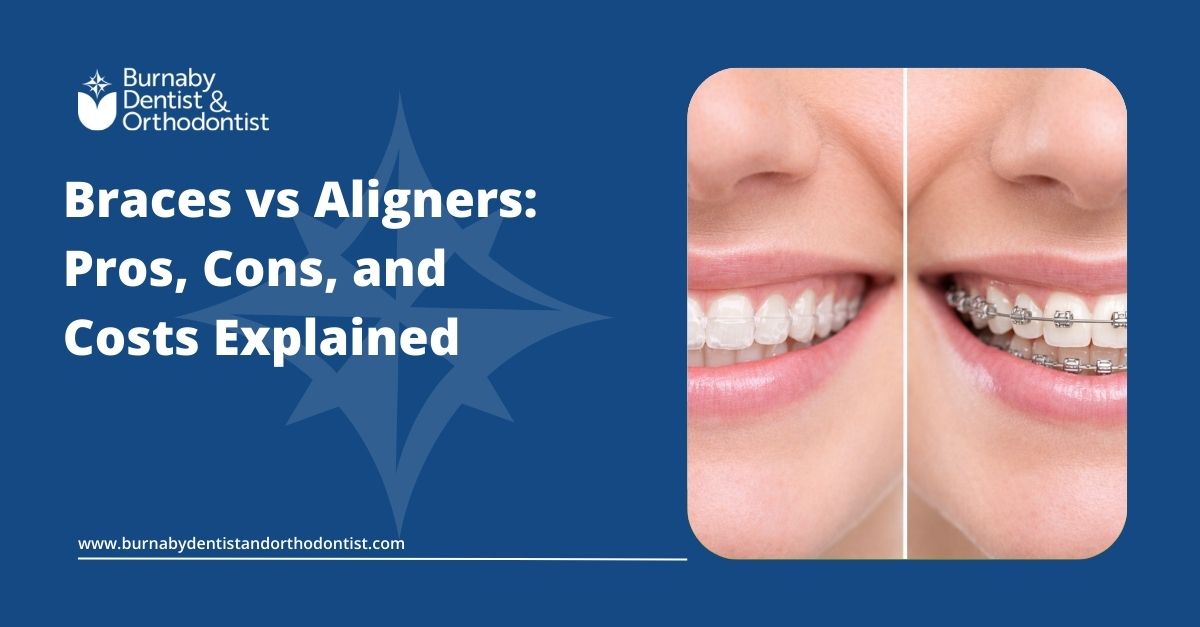
Choosing between clear aligners and traditional braces isn’t just about looks; it’s about your lifestyle, discipline, and treatment goals. While braces have long been considered the conventional route, many modern dental practices focus on Invisalign® clear aligners instead.
Why? Invisalign® is designed to address many alignment concerns using a removable, clear tray system. If you’re comparing orthodontic options, it’s helpful to understand how aligners differ from traditional braces.
Clear aligners and traditional braces are the two most common orthodontic systems. At Burnaby Dentist & Orthodontist, we provide Invisalign® clear aligners. Braces are discussed here to help patients understand how fixed orthodontic treatment compares to removable aligner therapy.
At a Glance:
Clear aligners and metal braces both straighten teeth, but they differ in comfort, appearance, and lifestyle demands.
- Clear Aligners: Less visible than traditional braces, removable for cleaning, comfortable, but require strict compliance and aren’t ideal for very complex cases.
- Metal Braces: Often recommended for complex cases, durable, and predictable, but more visible, with dietary restrictions and extra cleaning challenges.
- Cost & Time: Both are similar overall; braces may be more cost-effective for complex treatments, while aligners offer removability and a less visible appearance.
Both systems move teeth using controlled pressure, but they differ in design and daily impact. The right choice depends on your dental needs and daily habits.
What are clear aligners?
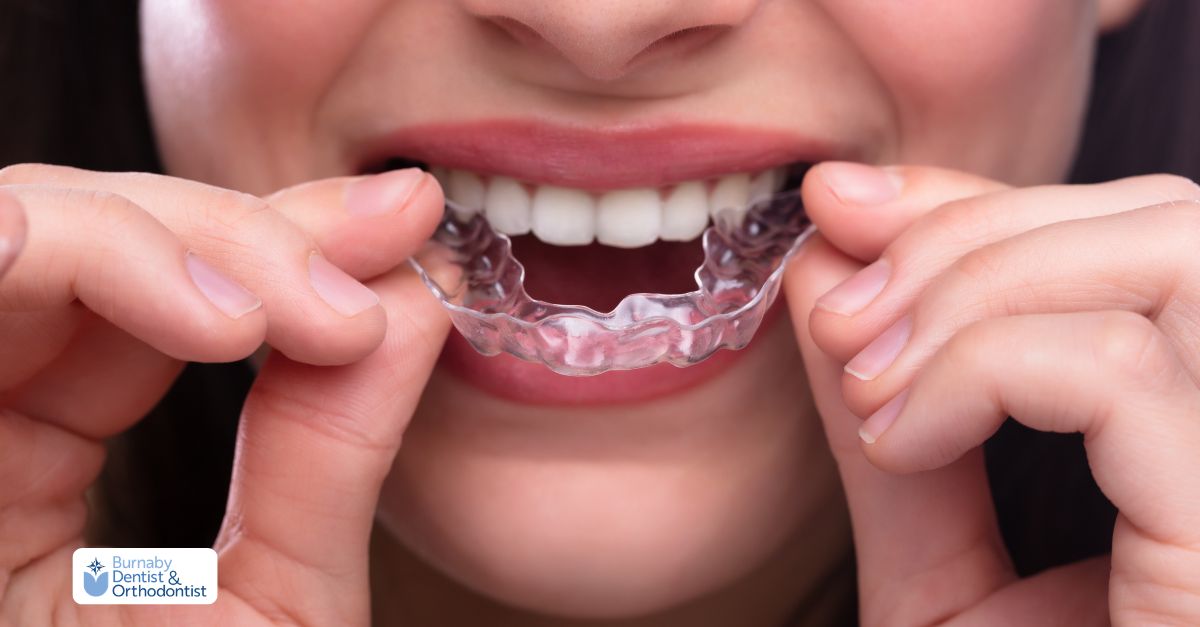
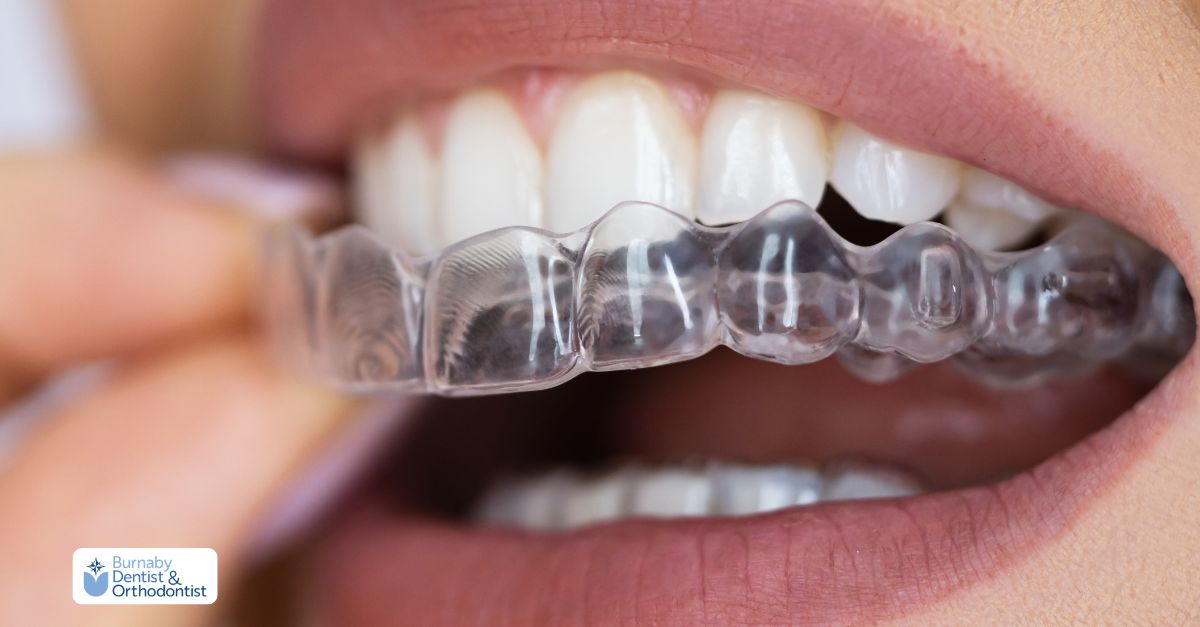
Clear aligners are custom-made trays designed to gradually shift your teeth into alignment. Each set is worn for about one to two weeks before switching to the next, with the full series guiding your teeth toward their final position.
You’ll need to wear them 20–22 hours a day for results to stay on track. At Burnaby Dentist & Orthodontist, we offer Invisalign®, one of the commonly used clear aligner systems with a nearly invisible appearance.
Pros of Clear Aligners
Clear aligners bring several advantages that make them appealing to many patients, especially those who value discretion and flexibility.
- Nearly invisible, making treatment discreet
- Removable for meals, brushing, and flossing
- Generally more comfortable with no wires or brackets
- Fewer food restrictions compared to braces
Cons of Clear Aligners
Despite their benefits, clear aligners aren’t ideal for every situation and come with limitations to be aware of:
- Require strict compliance: must be worn 20–22 hours daily
- Easier to misplace or damage since they’re removable
- May require small attachments that slightly reduce invisibility
- Suitability depends on individual case complexity and clinical findings
What are metal braces?
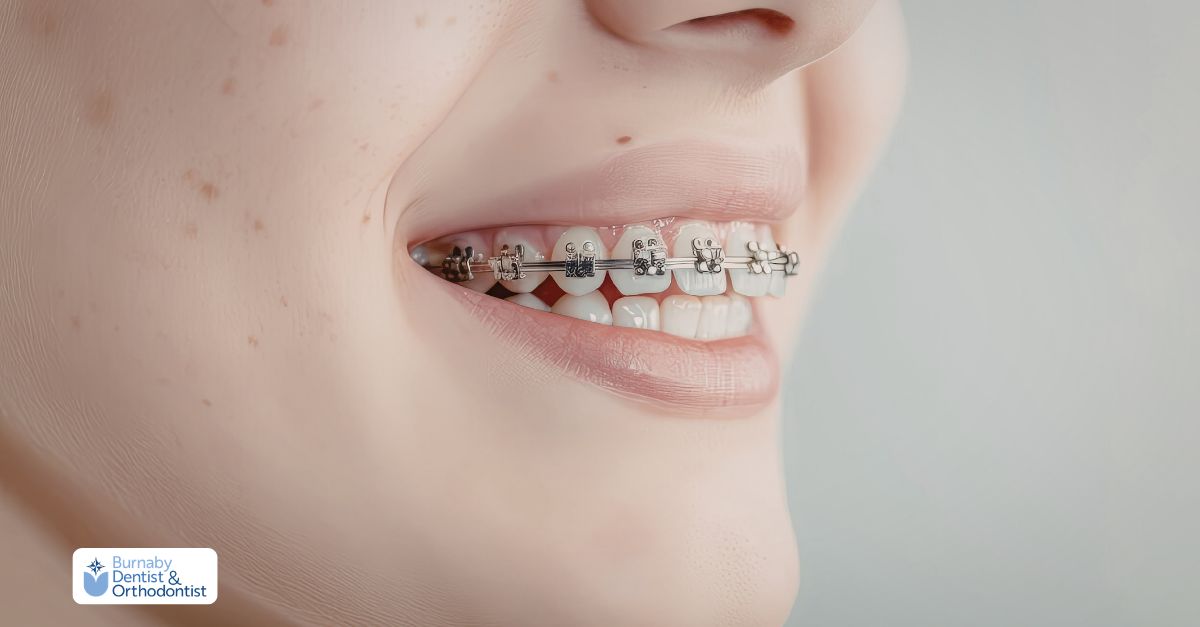
Metal braces are the traditional orthodontic system, where brackets are bonded to your teeth and connected by wires that the dentist periodically adjusts. These adjustments apply steady pressure, gradually guiding your teeth into alignment.
Braces are often recommended for complex orthodontic cases, including severe crowding, bite problems, and rotations.
Pros of Metal Braces
Metal braces remain a commonly used orthodontic option because of their strength, reliability, and ability to correct complex orthodontic cases.
- Effective for severe crowding and complex bite issues
- Fixed in place, so no risk of misplacing them
- Reliable for cases requiring precise, complex corrections
- Durable and not dependent on daily wear compliance
Cons of Metal Braces
While effective, metal braces also come with drawbacks that can affect comfort, appearance, and daily routines.
- Highly visible, affecting smile aesthetics during treatment
- Brackets and wires may cause irritation or sores
- Require dietary restrictions to prevent damage
- Cleaning is more difficult, needing extra tools and time
- Some patients may need orthodontic separators before placement, adding to the adjustment phase
Invisalign® may be considered as a removable alternative, depending on clinical findings.
Clear Aligners vs Braces: Direct Comparison Guide
When choosing between aligners and braces, it’s helpful to compare their differences side by side. Each offers unique advantages depending on your needs and lifestyle, and understanding those distinctions will guide you toward the best teeth straightening option for your smile.
At Burnaby Dentist & Orthodontist we provide Invisalign® clear aligners; a system that may be suitable for many patients who prefer a removable option.
| Factor | Clear Aligners | Metal Braces |
| Appearance | Less Visible | Clearly Visible |
| Comfort | Smooth Plastic, Less Irritation | Brackets and Wires May Cause Discomfort |
| Effectiveness | Often Used for Mild to Moderate Cases | Often Recommended for More Complex Case Types |
| Cost | Similar to Braces, May Vary by Case | Similar Range, Sometimes Lower |
| Treatment Time | Often Comparable, Requires Compliance | Timelines Managed Through Scheduled Adjustments |
| Maintenance | Removable for Eating and Cleaning | Requires Special Tools for Cleaning |
| Lifestyle Impact | Remove to Brush | Dietary Restrictions, Fixed Until Finished |
Key Difference Between Clear Aligners and Metal Braces
Clear aligners and braces both straighten teeth, but their impact on daily life is very different. Invisalign® uses removable, custom-made trays that apply gentle pressure to shift teeth over time, almost invisibly. Braces rely on fixed brackets and wires, which are fixed in place and visible during treatment.

Begin Your Smile Journey With Dr. Sasan Hadianfar
Cost of Clear Aligners vs Braces in Burnaby
When comparing orthodontic treatments, cost is often a deciding factor, but value matters just as much as numbers.
Clear Aligners
Clear aligners are usually priced per case, with costs depending on the complexity of treatment and the number of trays required. At Burnaby Dentist & Orthodontist, Invisalign® is the system we use. Treatment plans are based on clinical findings and individual alignment needs.
Metal Braces
Traditional braces typically come with a set fee for the entire course of treatment, with adjustments included. They can sometimes be less expensive for longer or more complex cases, though they require more maintenance and lifestyle adjustments.
Insurance and Financing
Most dental insurance plans in Burnaby cover orthodontics in part, whether you choose aligners or braces. Coverage varies by plan. Financing options may be available depending on individual arrangements.
Perspective
Both aligners and braces can effectively straighten teeth. The main difference lies in lifestyle: aligners are removable and less visible than traditional braces. Some patients prefer aligners for their removability and appearance, while others may choose braces based on clinical needs.
Choosing the Right Orthodontic Option for Your Smile
The best choice depends on your dental needs, discipline, and priorities.
- Clear Aligners (Invisalign®): Often considered for mild to moderate alignment concerns. They’re discreet, removable for eating and cleaning, and designed for removable, day-to-day use.
- Metal Braces: Effective for complex bite issues and severe crowding. They are commonly used in cases requiring fixed orthodontic mechanics.
At Burnaby Dentist & Orthodontist, Invisalign® clear aligners are the orthodontic system we provide.
Hybrid Options
Some patients benefit from alternatives like ceramic braces or lingual braces, which blend strength with a more discreet appearance.
Safety and Effectiveness of Braces and Aligners
Both clear aligners and metal braces are established orthodontic treatments, but their effectiveness depends on case complexity and patient behaviour.
Clear Aligners
Often used for mild to moderate crowding and bite issues, aligners rely on consistent wear to stay effective. Missed hours can slow or reverse progress, so discipline is key.
Metal Braces
Braces are often recommended for more complex orthodontic cases, applying continuous pressure without depending on daily compliance. However, their fixed design also comes with visibility and lifestyle limitations.
Why Burnaby Dentist & Orthodontist Is the Right Choice
Choosing orthodontic treatment isn’t just about the method; it’s about the team guiding you through it. At Burnaby Dentist & Orthodontist, orthodontic treatment is delivered using Invisalign® clear aligner therapy, supported by digital imaging and personalized treatment planning.
Each plan is based on individual alignment goals, digital imaging and clinical assessment. Beyond technology, our team emphasizes comfort, education, and patient support.
Conclusion
Clear aligners and metal braces both straighten teeth effectively; the difference lies in how they fit into your lifestyle. Aligners are removable and less visible, while braces are fixed and visible during treatment.
Invisalign® is commonly used for mild to moderate alignment concerns and may be appropriate depending on clinical findings. At Burnaby Dentist & Orthodontist, we take the time to evaluate your needs, explain your treatment path, and develop a treatment plan based on your clinical needs and alignment goals.
If you would like to explore orthodontic options, an appointment allows time to review your alignment, discuss suitability, and understand available treatment approaches.
Do aligners work as well as braces?

For mild to moderate cases, yes. For severe bite problems or major crowding, braces are often recommended for more complex cases.
Are braces faster than aligners?
Treatment times are often similar, but braces may be recommended in complex cases where continuous force is needed.
Can aligners fix overbites?
Mild to moderate overbites can be treated with aligners. Severe bite issues usually require braces or a combination of orthodontic methods.
Which option is less painful?
Aligners do not involve brackets or wires, which may reduce soft tissue irritation for some patients. Both options may cause temporary soreness as teeth adjust.